Hyperbaric oxygen therapy — commonly known as HBOT — is one of the most scientifically studied non-invasive medical treatments available today. By delivering pure oxygen in a pressurised environment, HBOT may support the body’s natural healing processes at a cellular level, making it a cornerstone of integrative medicine programmes worldwide.
What Is Hyperbaric Oxygen Therapy?
Hyperbaric oxygen therapy involves breathing 100% pure oxygen inside a specialised chamber that is pressurised to above normal atmospheric levels — typically around 2.0 ATA (atmospheres absolute), which is roughly equivalent to being 10 metres underwater. Under these conditions, oxygen dissolves directly into the blood plasma, cerebrospinal fluid, and lymphatic fluid — not just red blood cells — allowing significantly higher concentrations of oxygen to reach tissues throughout the body.
This elevated oxygen delivery is what makes HBOT therapeutically distinct. Standard breathing at sea level saturates haemoglobin at around 98%, leaving little room for improvement. HBOT circumvents this ceiling by dissolving oxygen directly into plasma, potentially increasing tissue oxygen levels by several times the normal rate.
How HBOT Works: The Science of Pressurised Oxygen
The therapeutic mechanisms of HBOT are multifaceted. Research suggests the elevated oxygen environment may:
- Stimulate the formation of new blood vessels (angiogenesis) in oxygen-deprived tissues
- Support the reduction of inflammation at the cellular level
- Enhance the activity of white blood cells, potentially strengthening immune function
- Promote the release of stem cells and growth factors from bone marrow
- Support mitochondrial function, which underpins energy production throughout the body
- Create an environment that may be less hospitable to certain anaerobic pathogens
The pressurisation itself — at 2.0 ATA — is a carefully calibrated therapeutic dose. This level balances efficacy with safety and is the standard used in physician-supervised clinical programmes.
What Conditions May Respond to HBOT?
HBOT has been studied across a range of conditions. While individual responses vary and HBOT is not a cure for any condition, research suggests it may provide supportive benefit for:
- Neurological recovery — including post-stroke rehabilitation and traumatic brain injury support
- Wound healing — particularly chronic, non-healing wounds and diabetic foot ulcers
- Inflammatory conditions — research into conditions such as Lyme disease, fibromyalgia, and autoimmune presentations
- Post-infection recovery — including long-term fatigue and cognitive symptoms following illness
- Sports recovery and performance — supporting tissue repair after intense training or injury
- Longevity and cellular health — emerging research on telomere dynamics and cellular senescence
It is important to note that HBOT should always be used as part of a broader, physician-supervised treatment plan. It is not appropriate for everyone, and a thorough clinical assessment is essential before beginning.
What Does an HBOT Session Feel Like?
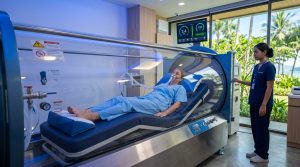
An HBOT session is generally well-tolerated. You will enter a comfortable, climate-controlled hyperbaric chamber and lie or recline as the pressure gradually increases. During pressurisation, you may notice a sensation of fullness in your ears — similar to descending in an aeroplane — which resolves by gently equalising pressure, much as you would when flying.
Once at full pressure (2.0 ATA), you breathe normally through a mask or hood delivering 100% oxygen. Sessions typically last between 60 and 90 minutes. During this time, many patients read, listen to music, or simply rest. Depressurisation at the end of the session is gradual and comfortable. Most people report feeling relaxed after a session, though some experience mild fatigue initially as the body adjusts.
How Many Sessions Are Typically Needed?
The number of HBOT sessions required varies considerably depending on the individual’s health status, goals, and clinical presentation. Some protocols involve as few as 10 sessions for general wellness and recovery support, while therapeutic programmes for more complex conditions may involve 20, 40, or more sessions over several weeks.
Your physician will assess your case individually and recommend a programme tailored to your specific needs and goals. Progress is typically reviewed throughout the course of treatment, with adjustments made as appropriate.
Is HBOT Safe?
When delivered in a properly equipped clinical facility under physician supervision, HBOT has a well-established safety profile. The most common side effect is temporary ear or sinus discomfort during pressurisation, which usually resolves quickly. More serious complications are rare and are largely mitigated by thorough pre-treatment screening.
Contraindications include certain lung conditions, some medications, and recent ear surgery, among others. This is why a comprehensive medical assessment prior to treatment is not optional — it is essential. A qualified physician should review your full medical history before any HBOT programme commences.
At Holina Clinic
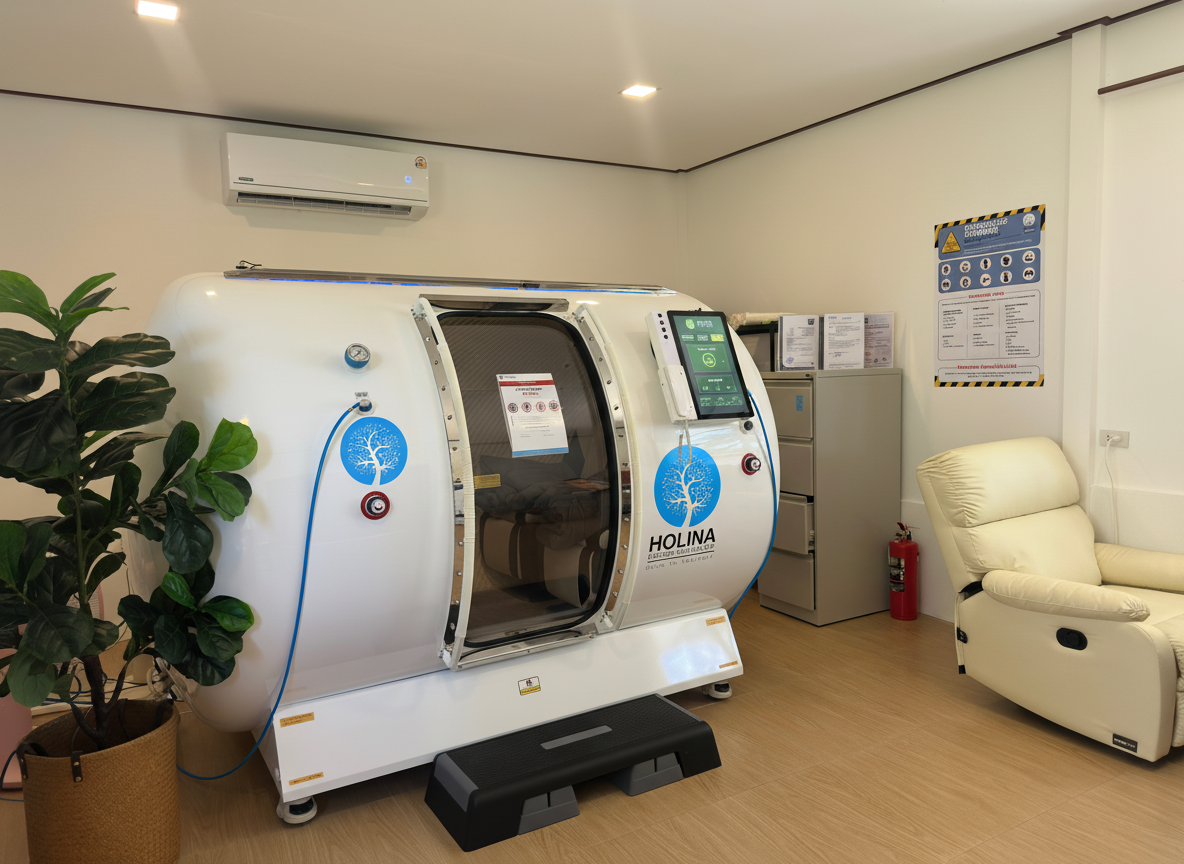
Holina Clinic’s HBOT programme is physician-supervised and delivered in a state-of-the-art hyperbaric chamber on the island of Koh Phangan, Thailand. Each patient undergoes a thorough clinical assessment before beginning treatment, and sessions are tailored to individual health goals — whether that is recovery support, neurological rehabilitation, longevity, or performance optimisation. Holina’s serene island setting provides an ideal environment for deep, restorative treatment.
Learn more about Hyperbaric Oxygen Therapy at Holina Clinic →
Always consult with a qualified physician before beginning any new treatment programme.
nn
For a broader overview of how this treatment fits within Holina’s integrated approach, read The Complete Guide to Hyperbaric Oxygen Therapy (HBOT) at Holina Clinic.