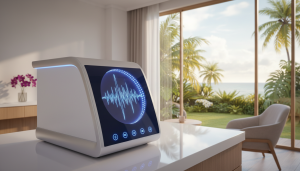
The body is constantly communicating — through heart rate, muscle tension, skin conductance, and brainwave patterns — but most of us have never learned to listen. Biofeedback therapy changes that. By making these invisible physiological signals visible in real time, biofeedback creates a feedback loop that allows the mind to learn, over time, to regulate what was previously considered automatic. The results can be profound.
What Is Biofeedback Therapy?
Biofeedback is a non-invasive therapeutic modality in which sensors are placed on or near the body to measure specific physiological signals. These measurements are fed back to the patient in real time — typically via visual displays, audio tones, or graphs — creating an immediate window into processes that normally occur outside conscious awareness.
The underlying principle is operant conditioning: when you can see or hear a physiological signal change in response to your mental state or behaviour, you can learn — with practice — to consciously influence that signal. Over repeated sessions, this learning can become internalised, producing lasting changes in physiological regulation even without the equipment.
What Does Biofeedback Measure?
Modern biofeedback equipment can monitor a range of physiological parameters, including:
- Heart rate variability (HRV): The variation in time between heartbeats — a sensitive marker of autonomic nervous system balance and stress resilience
- Skin conductance (galvanic skin response): Subtle changes in skin electrical conductance that reflect sympathetic nervous system activation — a direct measure of stress arousal
- Electromyography (EMG): Muscle tension measured via surface electrodes, useful for identifying and reducing chronic muscular bracing
- Peripheral temperature: Finger or hand temperature, which reflects blood flow and is inversely related to stress states
- Respiration rate and pattern: Breathing rhythm and depth, which have a direct relationship with autonomic nervous system tone
- Brainwave activity (EEG): Electrical patterns in the brain across different frequency bands — this overlaps with neurofeedback, a specialised form of biofeedback focused specifically on brain regulation
How Does Real-Time Feedback Train Regulation?
The learning process in biofeedback is essentially one of self-discovery. A trained therapist will guide you through various mental, breathing, or relaxation techniques while you observe how your physiology responds. When you find an approach that moves a signal in the desired direction — for example, increasing HRV or reducing skin conductance — the system reinforces that response.
With repetition, the nervous system learns to access these regulatory states more readily, and the window of physiological tolerance widens. This is sometimes described as improving “vagal tone” or strengthening the parasympathetic nervous system — the rest-and-repair branch of the autonomic system. The practical result is greater resilience to stress, faster recovery from arousal, and reduced baseline tension.
What Conditions May Benefit From Biofeedback?
Research suggests biofeedback may offer supportive benefit across a range of conditions:
- Stress and anxiety: By directly training down-regulation of the sympathetic nervous system, biofeedback may help individuals develop more effective stress responses
- Chronic pain: Conditions such as tension headaches, fibromyalgia, and temporomandibular joint (TMJ) disorders have been studied in biofeedback research, with some findings suggesting improvement in pain markers
- Performance optimisation: Athletes, executives, and high-performers use biofeedback to train composure under pressure and optimise focus states
- Rehabilitation: Biofeedback is used in physical therapy to retrain muscle activation patterns following injury or surgery
- Sleep quality: Improved autonomic regulation may support better sleep architecture and reduced night-time arousal
What Does a Biofeedback Session Involve?
Sessions typically last between 45 and 60 minutes. Sensors are attached to the skin — comfortably and non-invasively — and connected to the biofeedback system. Your therapist will explain what the readings mean and guide you through exercises designed to elicit specific physiological responses. Sessions may incorporate breathing protocols, mindfulness techniques, progressive relaxation, or visualisation, depending on the goal.
Most individuals require a series of sessions — often six to twenty — to achieve meaningful, lasting changes. Progress is tracked objectively using the physiological data captured during each session, allowing the programme to be adjusted based on measurable response.
At Holina Clinic
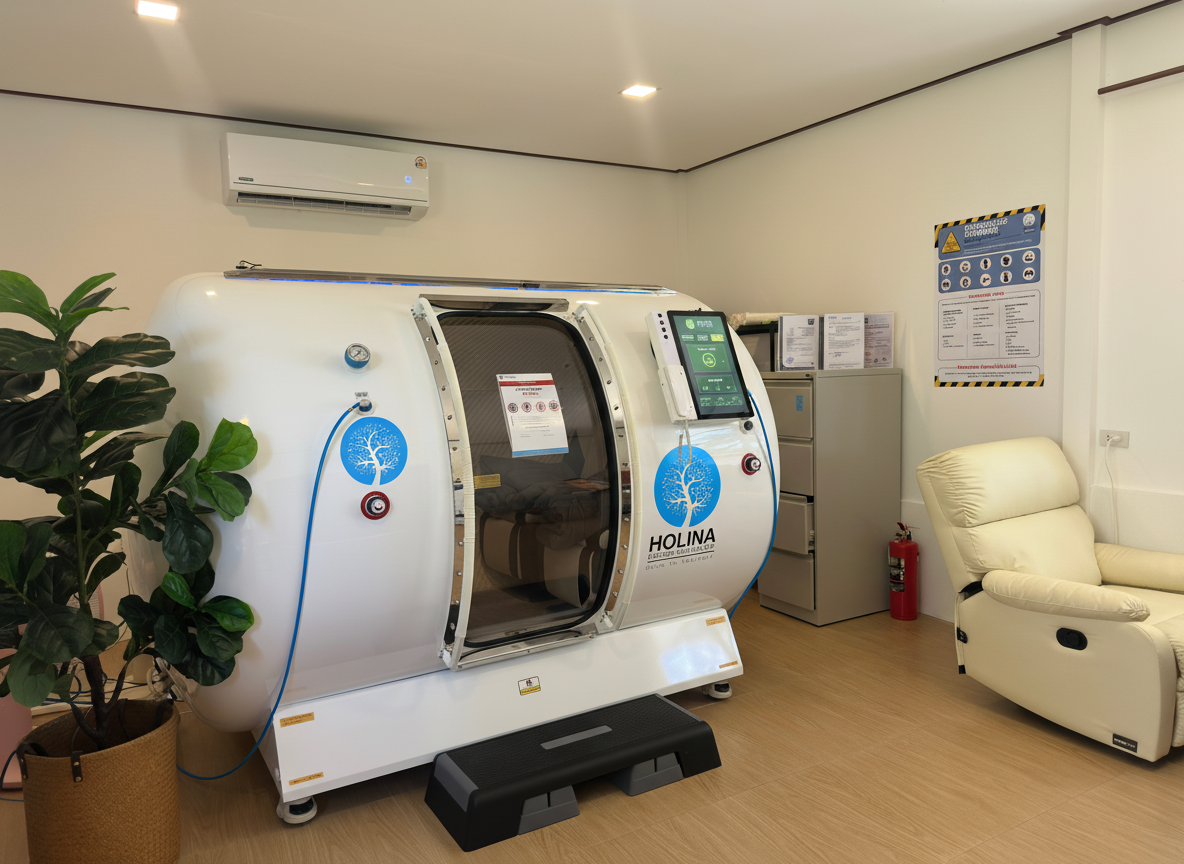
At Holina Clinic, biofeedback is integrated into our advanced diagnostics and therapeutic assessment process, providing a precise, data-driven window into the state of your autonomic nervous system and stress physiology. Combined with Holina’s broader diagnostic suite and physician-supervised treatment programmes on Koh Phangan, biofeedback forms part of a genuinely integrated approach to health — addressing not just symptoms, but the underlying regulatory patterns that sustain them.
Learn more about Advanced Diagnostics at Holina Clinic →
Always consult with a qualified physician before beginning any new treatment programme.
nn
To understand how biofeedback fits within Holina’s broader treatment offering, read The Complete Guide to Hyperbaric Oxygen Therapy (HBOT) at Holina Clinic and Advanced Diagnostics at Holina Clinic: Bio-Resonance, Biofeedback & Wegamed.