Stem cell therapy sits at the forefront of regenerative medicine — a field that is rapidly evolving our understanding of the body’s capacity for repair and renewal. While still a subject of active research, the clinical application of stem cell-based treatments has expanded significantly in recent years, and a growing number of individuals are exploring stem cell therapy as part of comprehensive recovery and longevity programmes. Here is what the current science and clinical practice can tell us.
What Are Stem Cells?
Stem cells are undifferentiated biological cells with two defining characteristics: the ability to self-renew through cell division, and the ability to differentiate — that is, to develop into more specialised cell types. Different categories of stem cells exist along a spectrum of potency, from totipotent embryonic stem cells (capable of becoming any cell type) to multipotent adult stem cells found in specific tissues such as bone marrow, adipose tissue, and umbilical cord blood.
In the context of regenerative medicine, the stem cells most commonly used in clinical programmes are mesenchymal stem cells (MSCs) — a population found in connective tissue throughout the body that has demonstrated a range of potential therapeutic properties, including the ability to modulate inflammation, support tissue repair, and communicate with surrounding cells through secreted signalling molecules.
How Does Stem Cell Therapy Work?
Stem cell therapy involves the administration of exogenous (externally prepared) stem cells into the body, with the goal of augmenting the body’s natural repair and regenerative processes. The therapeutic mechanisms are an area of active investigation, but research suggests they may include:
- Paracrine signalling: Administered stem cells secrete a range of bioactive molecules — including growth factors, cytokines, and extracellular vesicles — that may stimulate resident cells to increase repair activity
- Immunomodulation: MSCs in particular have demonstrated the ability to modulate immune system activity, potentially reducing excessive inflammation that contributes to tissue damage and chronic disease
- Direct differentiation: In some contexts, stem cells may integrate into damaged tissue and differentiate into the cell types needed for repair — though the extent to which this occurs therapeutically is still being studied
- Angiogenesis support: Stem cell-secreted factors may promote the formation of new blood vessels, improving nutrient and oxygen delivery to damaged or degenerated tissues
What Conditions May Stem Cell Therapy Support?
The research landscape for stem cell therapy is broad and rapidly evolving. Potential areas of supportive benefit that are currently being studied or applied in clinical programmes include:
- Orthopaedic conditions — joint degeneration, cartilage damage, sports injuries
- Neurological conditions — research into conditions affecting the brain and nervous system is ongoing, with promising early findings in several areas
- Autoimmune and inflammatory conditions — where immunomodulatory properties may be of benefit
- Systemic ageing and longevity — reducing biological age markers and supporting cellular resilience
- Recovery from chronic illness or complex health challenges
It is essential to note that stem cell therapy is not approved as a treatment for all conditions in all jurisdictions, and that research findings vary significantly by condition, cell type, and delivery method. A thorough physician consultation is mandatory before considering any stem cell programme.
What Does the Treatment Process Involve?
A stem cell therapy programme at a clinical facility typically begins with a comprehensive assessment — including medical history, diagnostic testing, and a physician consultation — to determine whether the patient is an appropriate candidate and to identify the most suitable protocol. The cells used may be autologous (derived from the patient’s own tissue, such as bone marrow or adipose) or allogeneic (sourced from screened donors, such as umbilical cord-derived MSCs).
Administration routes vary depending on the target condition and may include intravenous infusion, direct injection into specific tissues or joints, or intrathecal delivery for neurological applications. Sessions may be single or conducted as a series, and treatment is typically combined with complementary supportive therapies to optimise the regenerative environment.
Safety and Important Considerations
Safety is a paramount concern in stem cell therapy. Reputable clinical programmes use rigorously screened and tested cells, adhere to sterile protocols, and conduct thorough pre-treatment assessments to screen for contraindications. As with any medical intervention, the risk profile varies by patient and protocol.
It is important to distinguish between established clinical programmes operating under physician oversight in regulated settings and unapproved or poorly regulated offerings. Patients should ask about the source and preparation of cells, the qualifications of the treating team, and the evidence base for the specific protocol being proposed.
At Holina Clinic
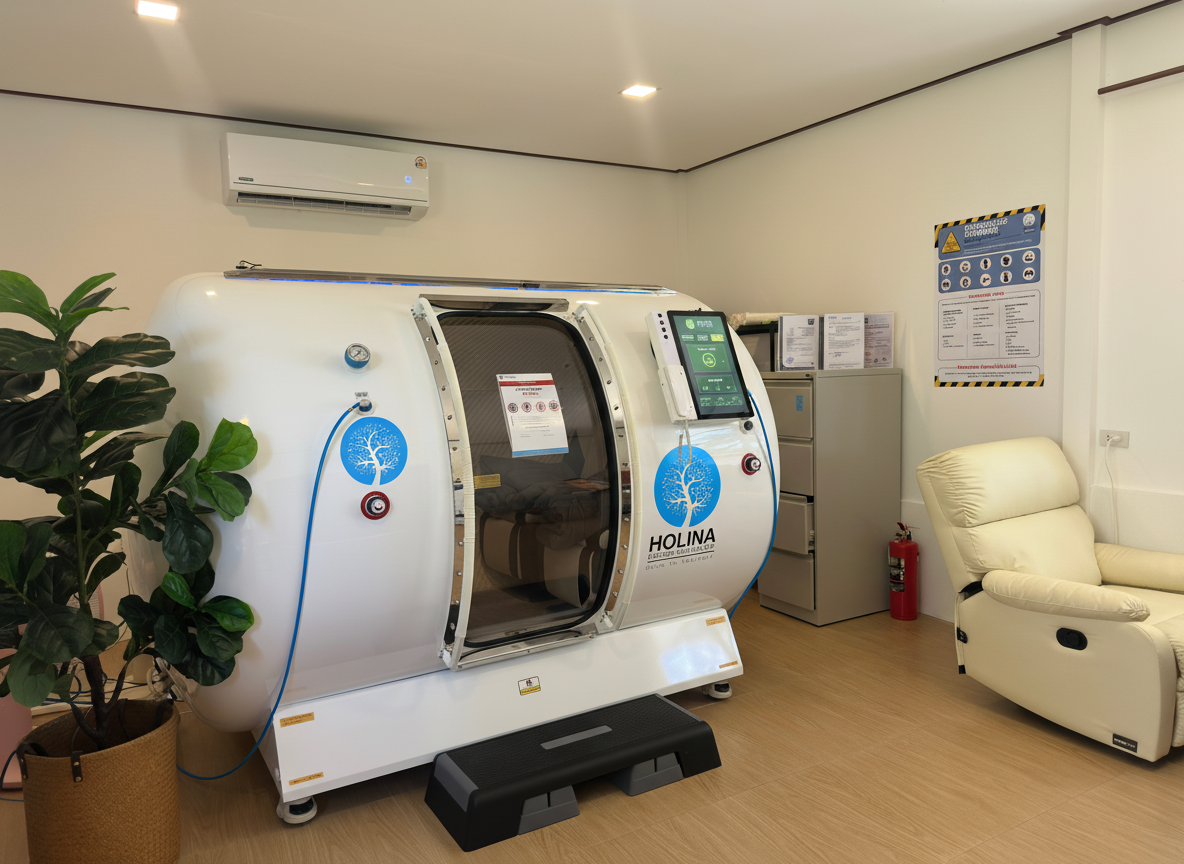
Holina Clinic’s stem cell therapy programme is delivered under direct physician supervision on Koh Phangan, Thailand. Every patient undergoes a comprehensive clinical assessment before any treatment commences, and protocols are individualised based on health status, goals, and diagnostic findings. Stem cell therapy at Holina is positioned within a broader integrative framework — often combined with HBOT, peptide therapy, and other regenerative modalities — to support the most favourable biological environment for recovery and renewal.
Learn more about Stem Cell Therapy at Holina Clinic →
Always consult with a qualified physician before beginning any new treatment programme. Stem cell therapy is not approved for all conditions and individual results vary.
nn
For a broader overview of how this treatment fits within Holina’s integrated approach, read Stem Cell Therapy, PRP & Peptides: Holina’s Complete Regenerative Medicine Guide.