Most people arrive at Holina Clinic having already tried the conventional route — physiotherapy, anti-inflammatories, steroid injections, perhaps surgery. Some come with chronic fatigue that no amount of rest resolves. Others are managing autoimmune conditions or neurological symptoms that standard medicine treats but rarely reverses. What they share is a question: is there something that works with the body’s own repair systems rather than simply managing around them? Regenerative medicine is our answer to that question — and this guide explains exactly how it works.
What Is Regenerative Medicine?
Regenerative medicine is a branch of medicine concerned with repairing, replacing, or regenerating damaged cells, tissues, and organs. Rather than suppressing symptoms or compensating for dysfunction, its aim is to restore the underlying biological structures responsible for healthy function.
The field draws on decades of research into how the human body already heals itself — through stem cells, growth factors, signalling peptides, and immune modulation — and applies that knowledge clinically. The premise is straightforward: the body has remarkable capacity for self-repair, but that capacity is often limited by age, chronic inflammation, environmental stressors, or the severity of the original injury. Regenerative therapies work by providing the biological raw materials or signalling cues that allow natural healing processes to proceed more effectively.
“The body does not forget how to heal. What regenerative medicine does is remove the obstacles — inflammatory burden, depleted stem cell pools, disrupted signalling — so that repair processes which were always possible can finally take place.”
At Holina Clinic, regenerative medicine encompasses three principal modalities: stem cell therapy, platelet-rich plasma (PRP) therapy, and peptide therapy. These are not isolated treatments. In many cases, they work most powerfully in combination, each addressing a different layer of the regenerative process. Our programmes are designed by physicians, supervised throughout, and tailored to the individual — not applied as a one-size protocol.
Koh Phangan’s environment plays a meaningful role here. The quality of rest, the reduction in chronic stressors, the proximity to clean air and nature — these are not incidental. Recovery and regeneration are physiologically demanding processes. They require sleep, reduced cortisol load, and the kind of sustained calm that is genuinely difficult to achieve at home. Our setting supports the biology.
Stem Cell Therapy: How It Works and What It Can Treat
Stem cells are undifferentiated cells with two defining capacities: self-renewal and differentiation. In practical terms, this means they can replicate themselves and transform into specialised cell types — cartilage, muscle, nerve, epithelial, and immune cells among them. This makes them foundational to tissue repair throughout life.
In a therapeutic context, stem cells are administered to damaged or dysfunctional tissue regions with the goal of stimulating repair. The mechanisms are more nuanced than simple cell replacement. Clinical experience and an expanding body of research suggest that much of the benefit derives from paracrine signalling — the release of cytokines, growth factors, and exosomes that modulate the local tissue environment, reduce chronic inflammation, recruit the body’s own repair cells, and promote vascularisation.
Stem cell therapy has been applied clinically across a wide range of conditions, including orthopaedic injuries, degenerative joint disease, neurological conditions, autoimmune disorders, and age-related tissue decline. The evidence base varies by indication, and we are transparent with patients about what is well-established versus what remains in the emerging category. What clinical experience consistently shows is meaningful improvement in function, pain levels, and quality of life in appropriately selected candidates.
For a deeper technical overview of the therapy itself — including administration routes, dosing considerations, and what the recovery period looks like — we recommend reading our dedicated stem cell therapy guide.
The Different Types of Stem Cell Therapy Used at Holina
Not all stem cell therapies are equivalent. The source of cells, their method of preparation, and their route of administration all materially affect both the safety profile and the likely clinical outcome. At Holina Clinic, we work with two primary categories.
Mesenchymal Stem Cells (MSCs)
Mesenchymal stem cells are among the most clinically studied stem cell types. They can be derived from several sources — bone marrow, adipose (fat) tissue, and umbilical cord tissue are the most common. MSCs have well-documented anti-inflammatory and immunomodulatory properties, alongside their capacity to differentiate into bone, cartilage, and connective tissue lineages. For orthopaedic, autoimmune, and systemic inflammatory conditions, MSCs are typically our primary cell of choice.
Exosomes and Secretome-Based Approaches
Exosomes are extracellular vesicles secreted by stem cells that carry much of the signalling payload responsible for regenerative effects. Research increasingly suggests that exosome-based therapies may deliver meaningful regenerative benefit with a particularly favourable safety profile. We incorporate exosome protocols where appropriate, particularly for neurological applications and anti-ageing programmes.
Autologous Versus Allogeneic Sources
Autologous therapies use the patient’s own cells — harvested, processed, and reintroduced. Allogeneic therapies use donor-sourced cells from screened, qualified suppliers. Each has clinical arguments in its favour. Autologous approaches eliminate immune compatibility concerns; allogeneic sources, particularly umbilical cord-derived MSCs, offer cells at peak potency, which can matter considerably in older patients whose own stem cell reserves are depleted. Our physicians assess which approach is most appropriate for each individual during the initial consultation.
All cell therapies at Holina are prepared under strict quality controls, sourced from licensed suppliers, and administered by qualified medical staff.
PRP Therapy: Harnessing Your Body’s Own Healing Power
Platelet-rich plasma therapy works on a principle that is elegantly simple: platelets, the small blood cells responsible for clotting, also carry a dense payload of growth factors — including PDGF, TGF-β, VEGF, and IGF-1 — that drive tissue repair and regeneration. By drawing a patient’s own blood, concentrating the platelet fraction through centrifugation, and injecting it into a target tissue, we deliver a high concentration of these repair signals precisely where they are needed.
PRP is autologous — it comes entirely from the patient — which means immune reaction is not a concern. The preparation process takes approximately 30 minutes and the treatment itself is minimally invasive. Recovery time is short, and the procedure can be repeated across a treatment course for cumulative effect.
Clinical applications include orthopaedic conditions (tendinopathies, ligament injuries, osteoarthritis), aesthetic medicine (skin rejuvenation, hair restoration), wound healing, and as a complement to stem cell therapy where enhanced growth factor signalling supports cell integration and activation.
PRP is frequently used at Holina as part of combination protocols — administered alongside stem cell therapy or peptides to amplify the regenerative environment. Used as a standalone therapy, it is particularly well-suited to localised musculoskeletal complaints and aesthetic applications where targeted tissue stimulation is the primary goal.
For a complete breakdown of the science, procedure, and clinical applications, see our dedicated guide to PRP therapy.
Peptide Therapy: Precision Cellular Signalling
Peptides are short chains of amino acids that function as signalling molecules — biological messengers that instruct cells to perform specific actions. The body produces thousands of peptides naturally; many decline with age or are disrupted by chronic illness, inflammation, or metabolic dysfunction. Peptide therapy involves administering specific bioactive peptides to restore or enhance these signalling pathways.
What distinguishes peptides from many other therapeutic agents is their specificity. Each peptide has a defined mechanism of action at the cellular level. This allows for highly targeted intervention — whether the goal is stimulating growth hormone secretion, accelerating tissue repair, modulating immune function, enhancing cognitive performance, or improving sleep architecture.
Among the peptides most commonly used in regenerative medicine contexts are BPC-157, which has demonstrated tissue repair properties across multiple organ systems; TB-500, associated with improved cellular migration and healing; and CJC-1295 with Ipamorelin, a growth hormone secretagogue combination used in recovery and anti-ageing protocols. These are administered as part of structured programmes designed by our physicians based on individual patient assessment.
Peptide therapy occupies a unique position in regenerative medicine because it works upstream — at the level of cellular instruction rather than tissue replacement. This makes it a powerful adjunct to both stem cell and PRP therapies, enhancing the cellular environment in which those treatments do their work.
For more on the mechanisms and protocols involved, read our full guide to peptide therapy for cellular repair.
How Stem Cell, PRP, and Peptide Therapies Work Together
Each of these three modalities acts on a different biological level. Understanding how they complement one another explains why combination protocols frequently produce outcomes that exceed what any single therapy achieves alone.
Stem cell therapy provides the cellular substrate for repair — introducing new regenerative capacity into damaged or depleted tissue. PRP creates the local growth factor environment that supports stem cell activity and accelerates the healing cascade. Peptide therapy operates at the signalling level, priming the systemic environment for recovery, reducing inflammatory interference, and sustaining the biological conditions that allow regeneration to proceed.
In practical terms, a patient receiving a stem cell injection to a damaged knee joint might also receive PRP to that joint to maximise local growth factor concentration, alongside a peptide protocol — such as BPC-157 — that promotes tissue healing systemically and helps modulate the inflammatory response that might otherwise blunt the stem cells’ effect.
This layered approach is not standard across all regenerative clinics. It reflects a philosophy at Holina of treating the whole biological context, not a single tissue site. The body is a system. Regenerative outcomes are best when the entire system — local tissue, immune environment, hormonal milieu, sleep, nutrition, stress — is addressed in concert.
Our medical team designs multi-modal programmes precisely because we have seen, across years of clinical experience here on Koh Phangan, that integrated protocols produce more durable results than isolated treatments.
Conditions We Treat With Regenerative Medicine
Holina Clinic’s regenerative medicine programme addresses a broad spectrum of conditions. The following represents the primary areas in which our physicians have clinical experience delivering these therapies:
- Osteoarthritis (knee, hip, shoulder) — pain reduction, cartilage support, and improved joint function
- Tendon and ligament injuries — including chronic tendinopathies resistant to conventional physiotherapy
- Spinal disc degeneration and back pain — regenerative support for disc and surrounding soft tissue
- Sports injuries and recovery — accelerated healing for muscle tears, joint injuries, and overuse conditions
- Post-surgical rehabilitation — supporting tissue repair and reducing recovery timelines following orthopaedic procedures
- Neurological conditions — including post-stroke rehabilitation, early-stage neurodegenerative conditions, and neuropathy
- Autoimmune conditions — immune modulation through MSC therapy for conditions including rheumatoid arthritis and inflammatory bowel disease
- Chronic fatigue and systemic inflammation — restoring mitochondrial function, reducing inflammatory burden
- Aesthetic and skin rejuvenation — cellular renewal for skin quality, texture, elasticity, and hair restoration
- Hormonal and metabolic decline — age-related decline in growth hormone, cellular energy, and metabolic regulation
- Long COVID and post-viral syndromes — emerging protocols addressing persistent systemic and neurological symptoms
- Preventive and longevity medicine — regenerative protocols for patients seeking to optimise biological age and preserve function proactively
Candidacy for each treatment modality is assessed individually. Not every condition listed above is appropriate for every therapy, and our physicians will not recommend treatments where clinical evidence or the patient’s health profile does not support it.
What Does a Regenerative Medicine Programme at Holina Look Like?
A regenerative medicine programme at Holina begins well before any treatment is administered. The initial consultation — conducted either remotely before arrival or in person at our Koh Phangan clinic — is a comprehensive clinical assessment. We review medical history, current medications, imaging and laboratory results, and the patient’s primary treatment goals. This is not a formality; it is the basis on which every programme is built.
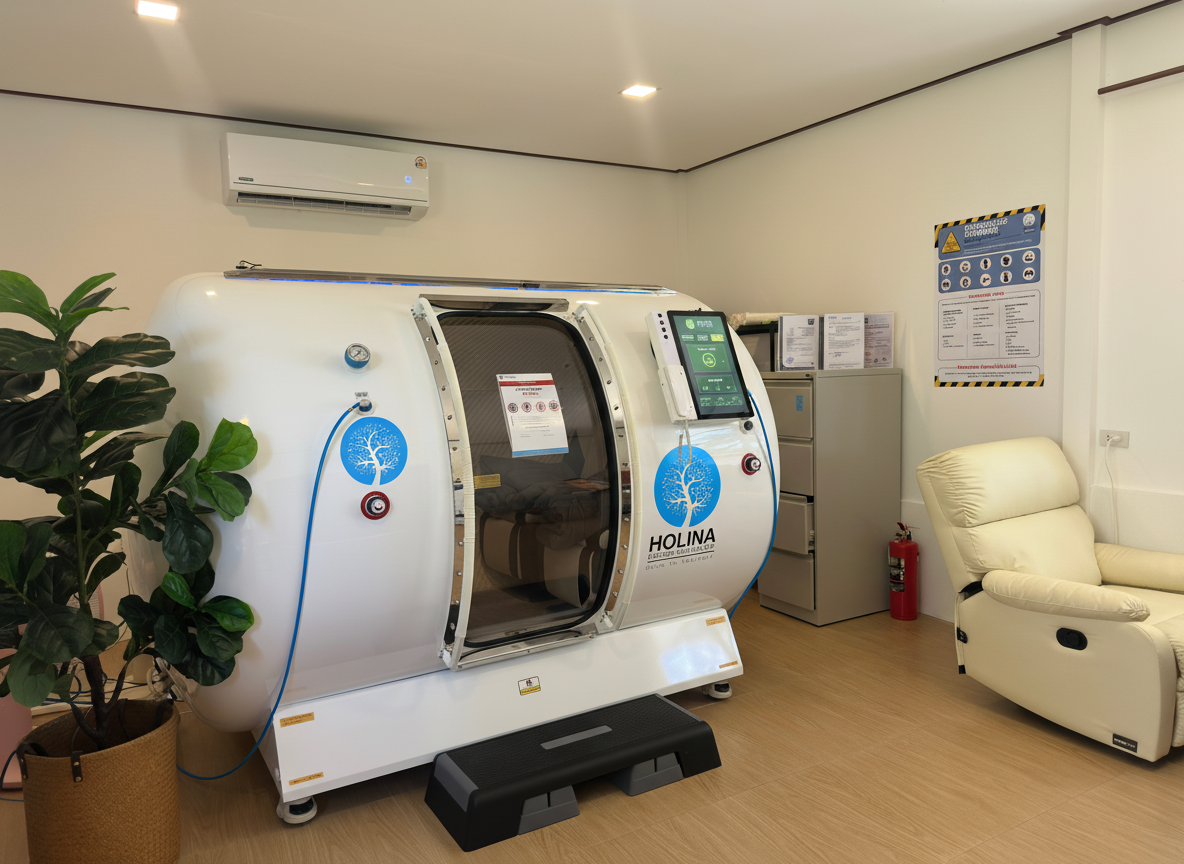
From this assessment, our medical team designs an individualised protocol. For some patients, this is a focused course of PRP for a specific joint injury. For others, it is a multi-week residential programme combining stem cell therapy, peptides, and supporting interventions — nutritional medicine, IV therapies, HBOT — within a structured daily schedule.
Programmes typically span five to fourteen days for residential stays, with follow-up protocols available for remote support after departure. Patients are accommodated in our clinic facilities on Koh Phangan, with daily access to their treating physician throughout their stay. Progress is monitored with serial assessments, and protocols are adjusted in response to how the individual is responding.
The Thailand setting matters practically as well as experiologically. Our location allows access to certain regenerative therapies, including allogeneic stem cell protocols, that are not available in many Western jurisdictions — administered within a fully licensed medical facility operating to international clinical standards.
Following completion of the in-clinic programme, patients receive a documented protocol for home continuation — peptide schedules, lifestyle recommendations, and a clear plan for follow-up assessment, typically at three and six months.
Safety, Protocols, and Medical Oversight at Holina Clinic
Regenerative medicine is a field that attracts significant interest — and, unfortunately, a proportion of providers who operate outside appropriate medical and ethical standards. Patients considering these therapies deserve honest, complete information about what rigorous clinical practice looks like.
Holina Clinic is a licensed medical facility. Every treatment protocol is designed and supervised by qualified physicians. Stem cell products are sourced exclusively from licensed, audited suppliers with full traceability. Our clinical team holds relevant qualifications and maintains ongoing professional development in regenerative medicine — a field that evolves rapidly, and where staying current with the evidence base is an ethical obligation.
Safety screening is thorough. Pre-treatment blood work, imaging, and health assessment are completed for every patient before any regenerative therapy is administered. Contraindications — including active malignancy, certain autoimmune conditions in acute phase, specific medications, and others — are assessed carefully. Where clinical judgement indicates that a therapy is not appropriate, we say so clearly.
We do not make guarantees of outcomes. Evidence suggests regenerative therapies produce meaningful benefit in well-selected candidates, but biology is individual and variable. Our commitment is to apply therapies where the evidence and clinical rationale support them, with full physician oversight, and to be transparent with patients about what we know and what we do not.
Who Is a Good Candidate for Regenerative Medicine?
The honest answer is that candidacy is individual and can only be determined through proper clinical assessment. That said, there are general profiles that tend to respond well.
Patients who have not achieved satisfactory results through conventional management of chronic musculoskeletal conditions are frequently good candidates — particularly where the underlying pathology involves tissue degeneration or persistent inflammation that has proven resistant to standard treatment. The same applies to individuals managing autoimmune conditions where immune modulation is clinically appropriate.
Age is a factor but not a disqualifier. Younger patients often have greater intrinsic regenerative capacity, which can amplify therapeutic effect. Older patients may benefit more from allogeneic cell sources precisely because their own stem cell reserves are reduced — and clinical experience shows consistently positive outcomes in this group when protocols are appropriately designed.
General health status, lifestyle, and patient commitment to the supporting elements of recovery — sleep, nutrition, stress reduction — all influence outcomes. This is one reason our residential programme model, in Koh Phangan’s recuperative environment, tends to produce strong results: the surrounding conditions support the biology that the therapies are trying to restore.
If you are uncertain whether regenerative medicine is appropriate for your situation, the right first step is a consultation with our medical team, not an assumption in either direction. We have told patients candidly when we did not think a therapy was right for them. That is what proper clinical practice looks like.
Frequently Asked Questions
Is stem cell therapy legal in Thailand?
Stem cell therapy is legally administered in Thailand at licensed medical facilities. Holina Clinic operates as a licensed medical facility and sources all cell products from compliant, audited suppliers. Patients should exercise caution with any provider — in Thailand or elsewhere — that cannot clearly demonstrate licensed facility status and qualified physician oversight.
How many sessions are typically required?
This varies significantly by condition, modality, and individual response. A focused PRP course for a tendon injury may involve three to five sessions over several weeks. A comprehensive stem cell programme is often a single intensive administration supported by complementary therapies, followed by a home maintenance protocol. Our physicians provide specific guidance based on individual assessment.
How soon will I notice results?
Regenerative therapies are not instantaneous. Stem cell protocols typically show progressive improvement over weeks to months as repair processes take place. PRP outcomes in joint conditions are often observed from four to six weeks. Peptide effects depend on the specific compound and goal — some patients notice changes in sleep and energy relatively quickly; tissue repair effects accumulate over longer periods.
Do I need to stay at the clinic during treatment?
Residential programmes provide the most comprehensive care and are recommended for multi-modality protocols. Day patient arrangements can be accommodated for certain treatments in appropriate circumstances. Our team will advise based on your programme and travel logistics.
If you would like to explore whether a regenerative medicine programme at Holina Clinic is the right step for you, we welcome your enquiry. Our medical team is happy to review your history, answer questions honestly, and — where appropriate — design a programme built around your specific situation. You can reach us at holinaclinic.com/contact/.