The injury, once it has happened, follows a predictable arc through the standard sports medicine pathway. The acute assessment. The imaging. The conservative treatment trial of rest, physiotherapy, and pharmacological pain management. The graded return-to-activity protocol. For uncomplicated injuries in patients with adequate baseline health, the pathway is reasonable and the outcomes are generally good. For complex injuries, for athletes whose careers depend on the speed and completeness of return, and for patients whose initial recovery has been incomplete or whose injury has recurred, the standard pathway is not always sufficient.
The interventions that elite athletes have been quietly using for the past decade — hyperbaric oxygen therapy, platelet-rich plasma, peptide protocols, and supporting regenerative interventions — are increasingly available to non-elite patients with significant injuries who want a more accelerated and complete recovery. The evidence base has matured. The clinical protocols are well-defined. And the availability outside elite sports medicine is now substantially better than it was even five years ago.
This piece outlines what HBOT and PRP actually do for sports injuries, when they are most appropriate, and what a clinical protocol at Holina Clinic involves.
What HBOT Does for Soft Tissue and Bone Healing
The PRP evidence base has matured. A systematic review in the Orthopaedic Journal of Sports Medicine documents meaningful clinical improvement from PRP treatment in chronic tendinopathies, with sustained benefit over 12 months in conditions including lateral epicondylitis, patellar tendinopathy, and plantar fasciitis.
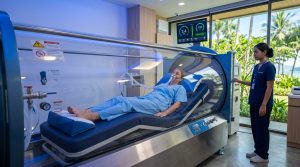
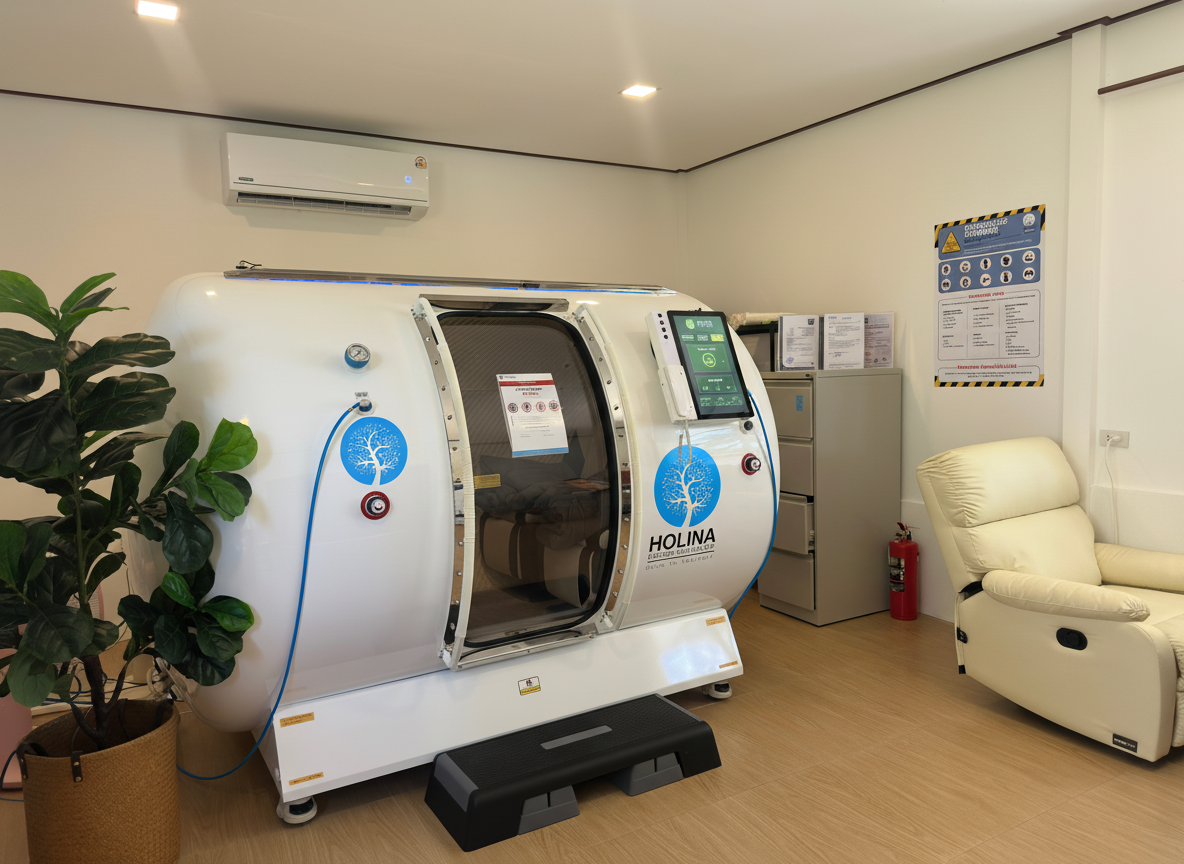
Hyperbaric oxygen therapy delivers oxygen at pressures above atmospheric, increasing tissue oxygenation in ways that ordinary breathing cannot achieve. For injured tissue specifically, this produces several documented effects.
Inflammation is modulated. The acute inflammatory response that follows injury is necessary, but excessive or prolonged inflammation is one of the main drivers of incomplete healing. HBOT modulates inflammatory cytokine signalling, reducing inflammation toward the level appropriate to healing without suppressing it below what the healing process requires.
Angiogenesis is supported. New blood vessel formation in healing tissue is essential to long-term recovery, and HBOT promotes angiogenesis through documented mechanisms involving vascular endothelial growth factor and related signalling.
Stem cell mobilisation occurs systemically. A structured HBOT course mobilises stem cells from bone marrow into circulation, with downstream effects on tissue repair capacity in the injured area.
Hypoxic tissue is restored. Injuries often produce regions of compromised perfusion where standard wound healing cannot fully complete. HBOT restores oxygen delivery to these regions, allowing the healing process to proceed.
Collagen synthesis is supported. The connective tissue rebuilding that injury recovery depends on is oxygen-dependent, and HBOT supports the cellular machinery responsible for it.
The clinical effects, in the patients we have worked with, are substantial. Recovery from significant soft tissue injuries that would otherwise have taken six to eight weeks frequently completes in three to four. Stress fractures and slow-healing bone injuries respond particularly well. Post-surgical recovery from orthopaedic procedures accelerates measurably when HBOT is included in the protocol.
What PRP Does for Tendon, Ligament, and Joint Healing
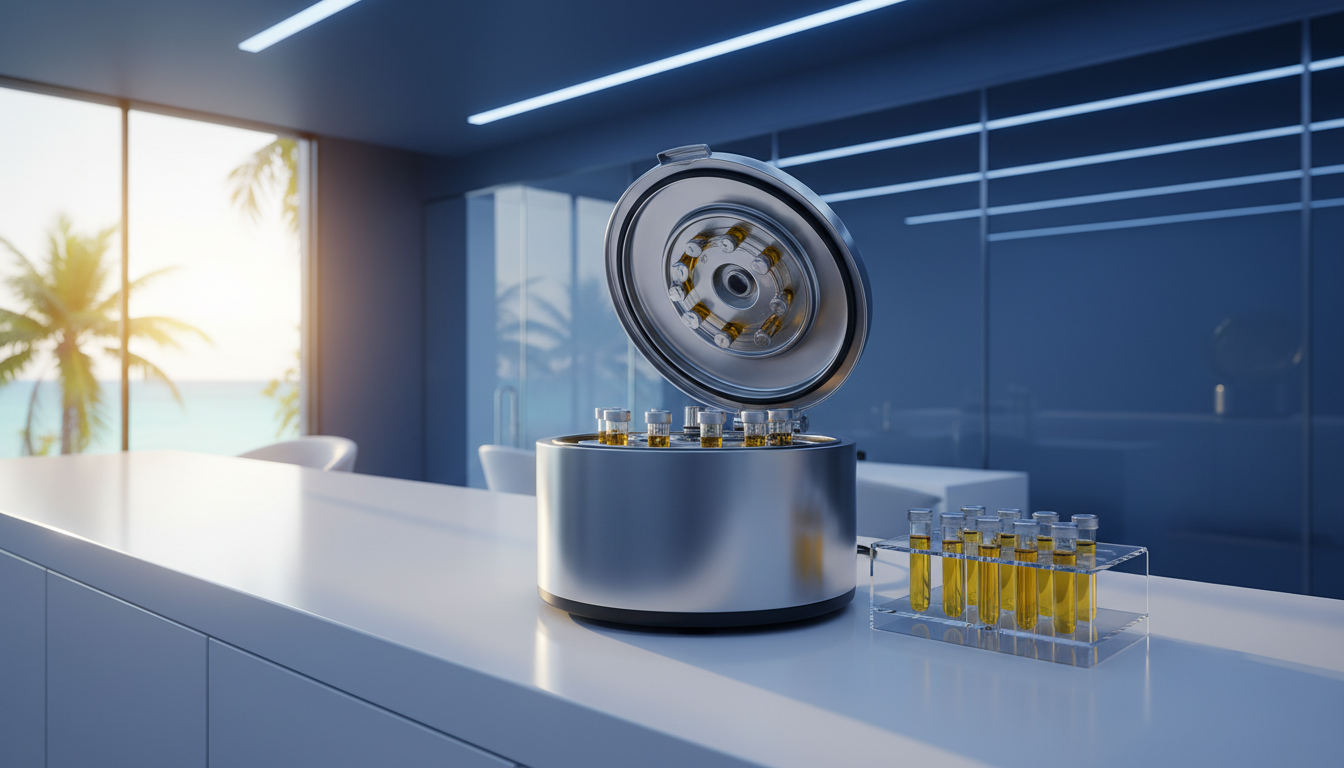
Platelet-rich plasma therapy involves the concentration of platelets from the patient’s own blood and the injection of the resulting concentrate into the injured tissue. The platelets release growth factors and signalling molecules that support tissue repair in ways that the body’s standard healing machinery, on its own, would not produce.
The clinical applications are well-established for several injury categories. Tendinopathies including tennis elbow, patellar tendinopathy, and Achilles tendinopathy respond well to PRP, particularly when conservative treatment has not produced complete recovery. Ligament injuries, both acute and chronic, benefit from PRP support during healing. Joint conditions including early osteoarthritis and post-injury cartilage damage have documented responses to PRP protocols. Muscle injuries, particularly chronic or incomplete-healing injuries, respond to PRP support.
The evidence base for PRP has matured considerably over the past decade. The protocols that produce the most reliable results involve careful patient selection, appropriate preparation of the PRP itself with documented platelet concentration, accurate ultrasound-guided placement of the injection, and structured rehabilitation following the treatment.
How HBOT and PRP Work Together
The combination of HBOT and PRP, for appropriate injuries, produces effects that exceed either alone. PRP delivers the regenerative signalling molecules. HBOT optimises the tissue environment in which those signals operate. The result, in our clinical experience, is faster and more complete healing than either intervention alone has been able to deliver.
The protocol typically involves PRP injection at the injury site, followed by a structured HBOT course of 20 to 30 sessions over four to six weeks. The HBOT is delivered both pre-PRP, to prepare the tissue, and post-PRP, to support the healing response the PRP is initiating.
For severe or complex injuries, additional supporting interventions are commonly indicated. Peptide protocols including BPC-157 and TB-500 in appropriate cases. Targeted micronutrient correction to address any substrate deficits that could limit healing. Structured rehabilitation programming matched to the injury and the protocol.
Who This Is Appropriate For
Patients with significant soft tissue injuries — tendinopathies, ligament injuries, muscle injuries — whose recovery has been incomplete despite adequate conservative treatment. Athletes returning from injury who want to accelerate recovery and minimise re-injury risk. Patients with chronic injury patterns whose standard pathway has produced partial but not complete resolution. Post-surgical patients seeking accelerated recovery from orthopaedic procedures, including ACL reconstruction, rotator cuff repair, and joint replacement. Patients with stress fractures or slow-healing bone injuries. Patients with early osteoarthritis seeking intervention before joint replacement becomes necessary.
The protocol is less appropriate for acute fractures in the immediate post-injury period where the focus should be on standard orthopaedic stabilisation, for patients with infections at the injury site, and for those with conditions that contraindicate either HBOT or PRP. These factors are assessed in pre-treatment evaluation.
What the Setting Adds
Patients undertaking sports injury recovery protocols at Holina Clinic typically stay residentially during the active treatment phase. This allows for daily HBOT sessions, integrated rehabilitation work, appropriate nutritional support, sleep optimisation, and the removal of the daily stressors and activity demands that frequently slow recovery in the home environment.
The full integrated approach — clinical intervention, supporting modalities, structured environment, and adequate time — produces recovery outcomes that are difficult to replicate in fragmented outpatient care. For athletes and high-performing professionals whose return to function carries significant value, the residential protocol is typically the most efficient available investment.
A Closing Note
If you are managing a sports injury whose recovery is not following the trajectory you or your treating team had expected, or if you are preparing for or recovering from an orthopaedic procedure and want the recovery to be as complete and rapid as possible, the protocols outlined here are clinically available and have substantial evidence supporting them. The first conversation with our clinical team is the beginning of finding out what your specific injury picture is and what the appropriate combined protocol would look like.