The brain is not a fixed organ. Decades of neuroscience research have established that it is profoundly plastic — capable of reorganising, strengthening, and refining its own circuitry in response to experience and training. Neurofeedback therapy makes this plasticity actionable: using real-time brainwave data to teach the brain to regulate its own electrical activity more effectively. The result is a therapy with applications ranging from peak cognitive performance to sleep quality, anxiety management, and trauma recovery.
What Is Neurofeedback Therapy?
Neurofeedback is a specialised form of biofeedback focused specifically on the brain’s electrical activity. Using electroencephalography (EEG) — a non-invasive method of measuring electrical activity at the scalp surface — neurofeedback systems capture the brain’s oscillatory patterns in real time, analyse them across frequency bands, and provide the patient with immediate sensory feedback (typically visual or auditory) that reflects the brain’s current regulatory state.
When the brain produces the targeted brainwave patterns — for example, more of a specific frequency associated with calm focus — the feedback signal is positive (a reward). When it moves away from the target, the feedback changes accordingly. Over repeated sessions, the brain learns — through operant conditioning — to sustain the desired regulatory state more readily and consistently, even outside the training environment.
How EEG Brain Training Works
EEG measures electrical activity across different frequency bands, each associated with different cognitive and physiological states:
- Delta (0.5–4 Hz): Deep sleep and restorative processes
- Theta (4–8 Hz): Drowsiness, creative states, and memory processing; can be associated with distraction when excessive in frontal regions
- Alpha (8–12 Hz): Calm, relaxed alertness; a bridge between rest and active processing
- Beta (12–30 Hz): Active thinking, focus, and engagement; excessive high-beta is associated with anxiety and rumination
- Gamma (30 Hz+): High-level cognitive binding and information integration
Neurofeedback training targets specific frequency imbalances identified through an initial EEG assessment, using personalised protocols to reward the brain for moving towards a more regulated, efficient pattern. This is not a passive process — the patient is an active participant in the training, engaged with the feedback screen throughout each session.
What Does Neurofeedback Target?
Research and clinical practice have explored neurofeedback across several domains:
- Focus and attention: Protocols targeting frontal and central theta/beta ratios have been studied in relation to attentional regulation, with research suggesting potential benefit for individuals experiencing difficulty with sustained focus and executive function
- Sleep quality: Neurofeedback training may support improvements in sleep onset, continuity, and depth by helping the brain transition more effectively into sleep-conducive brainwave states
- Anxiety and stress reactivity: Training protocols designed to promote alpha and lower high-beta activity may reduce chronic cortical over-arousal associated with anxiety, worry, and stress reactivity
- Trauma and PTSD: Neurofeedback has been studied as a component of trauma recovery programmes, with research suggesting potential benefits for hyperarousal symptoms, emotional regulation, and sleep disturbance in trauma presentations
- Cognitive performance: Peak performance applications include training for executives, athletes, and individuals seeking improvements in memory, processing speed, and mental resilience under pressure
What Does a Neurofeedback Session Feel Like?
A neurofeedback session begins with the placement of small, conductive EEG sensors on the scalp — a comfortable process that takes a few minutes and involves no electricity entering the body. You will then sit in front of a screen showing a feedback display — often a film, game, or visual pattern — while the system monitors your brainwave activity and adjusts the display in real time based on your brain’s regulatory state.
Sessions typically last 30 to 45 minutes. The experience is generally relaxing and non-demanding — there is no “trying harder” involved; the goal is to allow the brain to discover and reinforce optimal states naturally. After a session, many individuals report feeling calm, clear-headed, or unusually well-rested, though responses vary and early sessions sometimes involve a period of adjustment.
A meaningful course of neurofeedback typically involves between 20 and 40 sessions, with many individuals noticing significant changes within the first 10 to 15. Progress is tracked objectively using EEG data across the course of training.
How Neurofeedback Complements Other Therapies at Holina
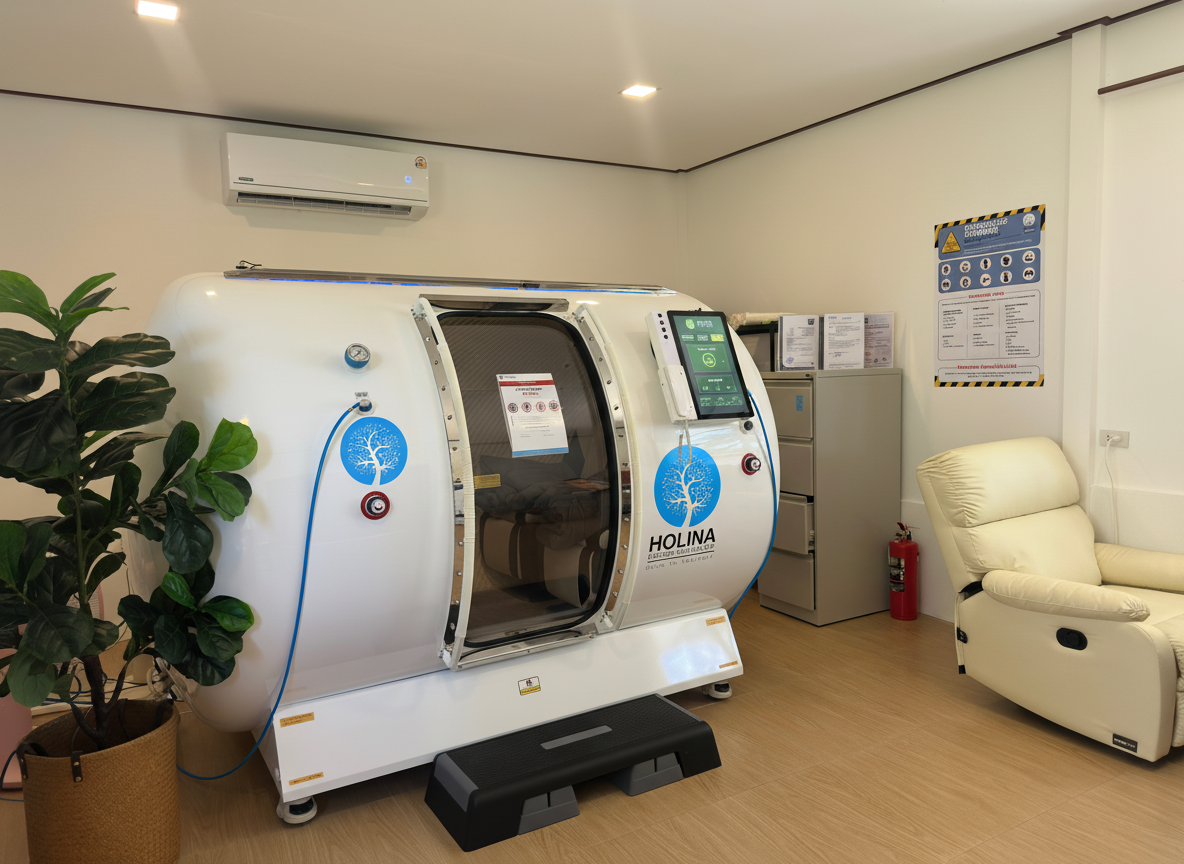
Neurofeedback’s effects on brain regulation and neurological resilience make it a natural complement to other therapies offered at Holina Clinic. Hyperbaric oxygen therapy, for example, may support improved cerebral oxygenation and neuroplasticity — creating a more receptive neurological environment for the learning that neurofeedback training relies on. Similarly, NAD+ infusion supports mitochondrial function in neurons, potentially enhancing the brain’s energy-dependent plasticity processes.
Together, these modalities offer a genuinely integrated approach to brain health — addressing neurological function from metabolic, circulatory, and regulatory angles simultaneously, which may produce more comprehensive and lasting outcomes than any single intervention in isolation.
At Holina Clinic
Holina Clinic delivers neurofeedback therapy as part of its physician-supervised integrative programme on Koh Phangan, Thailand. Each neurofeedback programme begins with a comprehensive EEG assessment to identify the specific patterns most relevant to the patient’s goals and symptoms. Training protocols are personalised, progress is tracked objectively throughout, and neurofeedback is integrated thoughtfully with complementary therapies to maximise the therapeutic environment for neurological change.
Learn more about Neurofeedback Therapy at Holina Clinic →
Always consult with a qualified physician before beginning any new treatment programme.
nn
For a broader overview of how this treatment fits within Holina’s integrated approach, read The Complete Guide to Hyperbaric Oxygen Therapy (HBOT) at Holina Clinic.