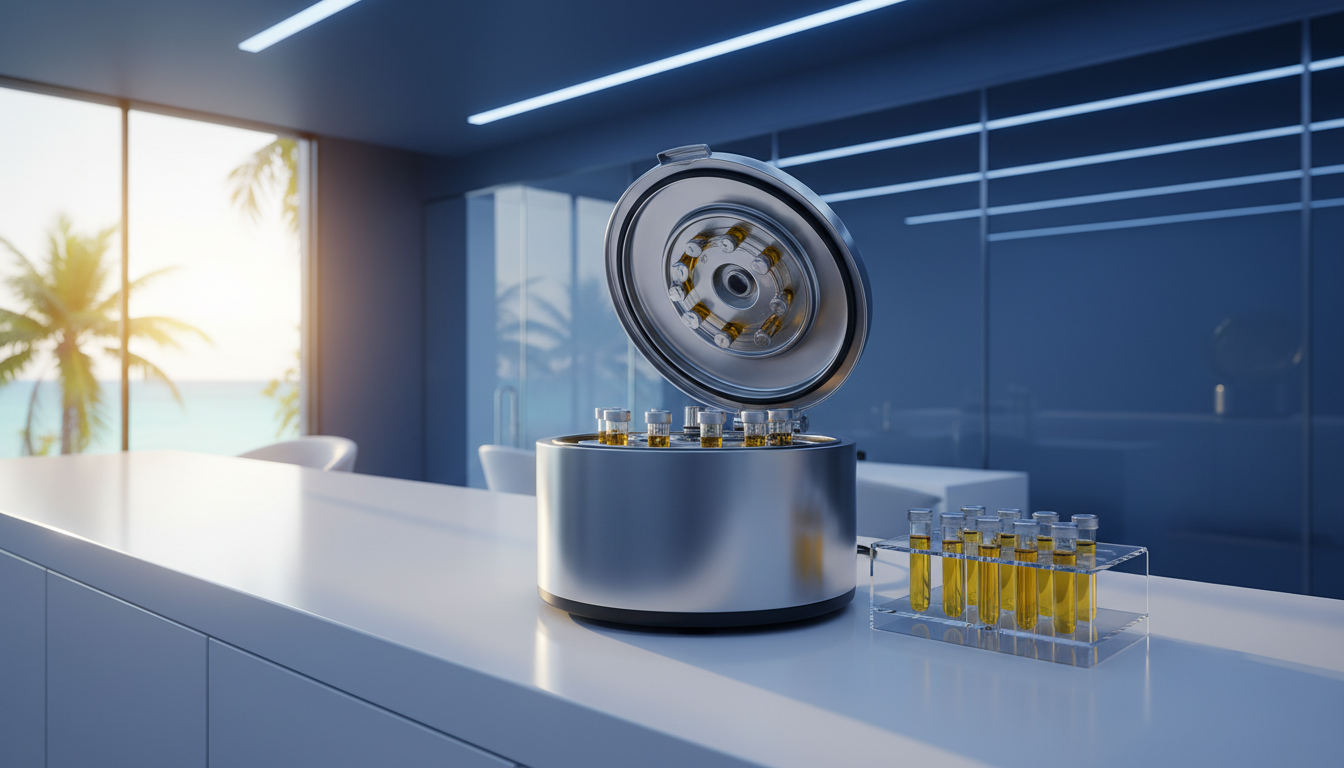
Platelet-rich plasma therapy — PRP therapy — is one of the most elegantly conceived treatments in regenerative medicine: using the concentrated healing factors found in your own blood to accelerate and enhance the body’s natural repair processes. Because the biological material comes from the patient themselves, PRP offers a highly biocompatible approach to tissue regeneration with a well-established safety profile.
What Is PRP?
Platelet-rich plasma (PRP) is a concentration of platelets derived from the patient’s own blood. Platelets are small, specialised blood cells best known for their role in clotting, but they carry something equally important: a rich cargo of growth factors and bioactive proteins that are central to the tissue repair process. When a platelet is activated — whether by injury or during the PRP preparation process — it releases these growth factors into the surrounding tissue, initiating and supporting the healing cascade.
In a PRP preparation, blood drawn from the patient is processed in a centrifuge to separate its components. The platelet-rich layer — typically containing three to five times the concentration of platelets found in normal blood — is then extracted for therapeutic use. The result is a potent, autologous (self-derived) solution that amplifies the signals your body would naturally send to injured tissue.
How Is Platelet-Rich Plasma Prepared?
The preparation process involves a straightforward blood draw, typically around 20-60 ml depending on the protocol. The blood is placed in specialised tubes and centrifuged — spun at high speed to separate red blood cells, white blood cells, platelet-poor plasma, and platelet-rich plasma by density. The platelet-rich fraction is carefully extracted and prepared for administration, sometimes with an activating agent to prime platelet release of growth factors.
The quality of the final PRP preparation depends on the centrifuge protocol, tube type, and technique — variables that are carefully controlled in clinical settings. The entire process from blood draw to administration typically takes 20 to 45 minutes.
The Mechanism: Growth Factors and Tissue Repair
The therapeutic action of PRP is primarily mediated by the growth factors contained within platelet alpha-granules. These include compounds such as platelet-derived growth factor (PDGF), transforming growth factor-beta (TGF-β), vascular endothelial growth factor (VEGF), and insulin-like growth factor (IGF) — each of which plays a specific role in the tissue repair process:
- Stimulating cell proliferation and migration to the site of injury
- Promoting collagen synthesis and matrix remodelling
- Supporting angiogenesis — the formation of new blood vessels that bring oxygen and nutrients to healing tissue
- Modulating the local inflammatory environment to support productive rather than chronic inflammation
- Activating stem cells in the local tissue environment to support regeneration
The net effect is an amplification of the body’s own healing response — potentially accelerating timelines, improving the quality of repair, and addressing situations where the natural healing process has stalled or been insufficient.
Applications of PRP Therapy
PRP therapy has been studied and clinically applied across a range of conditions and treatment goals:
- Joint and musculoskeletal conditions: PRP injections into joints, tendons, and ligaments have been studied for conditions including osteoarthritis, tendinopathy, and sports injuries. Research suggests potential benefit in reducing pain and improving function in some presentations
- Soft tissue repair: PRP may support healing in muscle injuries, chronic wounds, and post-surgical recovery
- Skin rejuvenation: PRP applied to the skin — through microneedling or injection — has been studied for its effects on collagen production, skin texture, tone, and the appearance of fine lines and scarring
- Hair restoration: Scalp PRP injections are used in some hair loss programmes, with research exploring effects on follicle stimulation and hair density
What Does a PRP Session Involve?
A PRP treatment begins with the blood draw and preparation described above. Once the PRP is ready, it is administered to the target area — typically via precise injection, guided by clinical anatomy and sometimes by imaging such as ultrasound for joint applications. The procedure is performed under clean, sterile conditions, and local anaesthesia may be used for comfort depending on the injection site and patient preference.
Some mild soreness, swelling, or bruising at the injection site in the days following treatment is normal and reflects the biological response the treatment is designed to initiate. Most patients return to normal activity relatively quickly, though recommendations vary based on the treated area and specific protocol.
At Holina Clinic
Holina Clinic delivers PRP therapy as part of its physician-supervised regenerative medicine programme on Koh Phangan, Thailand. Treatment is preceded by a thorough clinical assessment to determine suitability and to design the most appropriate protocol for each patient’s goals — whether addressing joint pain, tissue injury, skin health, or other targets. PRP is often combined with complementary regenerative therapies for an integrated, synergistic approach.
Learn more about PRP Therapy at Holina Clinic →
Always consult with a qualified physician before beginning any new treatment programme.
nn
For a broader overview of how this treatment fits within Holina’s integrated approach, read Stem Cell Therapy, PRP & Peptides: Holina’s Complete Regenerative Medicine Guide.