Hyperbaric oxygen therapy has quietly moved from the world of wound care and diving medicine into one of the most talked-about tools in regenerative health. Athletes are using it to recover faster. Neurologists are studying its effects on brain injury and cognitive decline. Wellness seekers are travelling across the globe specifically to access it. At Holina Clinic on Koh Phangan, we have seen first-hand what a structured course of HBOT can do — not as a miracle cure, but as a powerful, evidence-informed intervention that works with your body’s own repair mechanisms. This guide covers everything you need to know: the science, the conditions it addresses, what a session actually feels like, and how to decide whether it is right for you.
What Is Hyperbaric Oxygen Therapy?
Hyperbaric oxygen therapy — commonly abbreviated to HBOT — involves breathing pure oxygen inside a pressurised chamber. The word “hyperbaric” simply means greater than normal atmospheric pressure. Under everyday conditions, the air you breathe is roughly 21% oxygen at one atmosphere of pressure (1.0 ATA). Inside a hyperbaric chamber, both the concentration of oxygen and the surrounding pressure are elevated, typically to between 1.5 and 3.0 ATA depending on the clinical protocol being used.
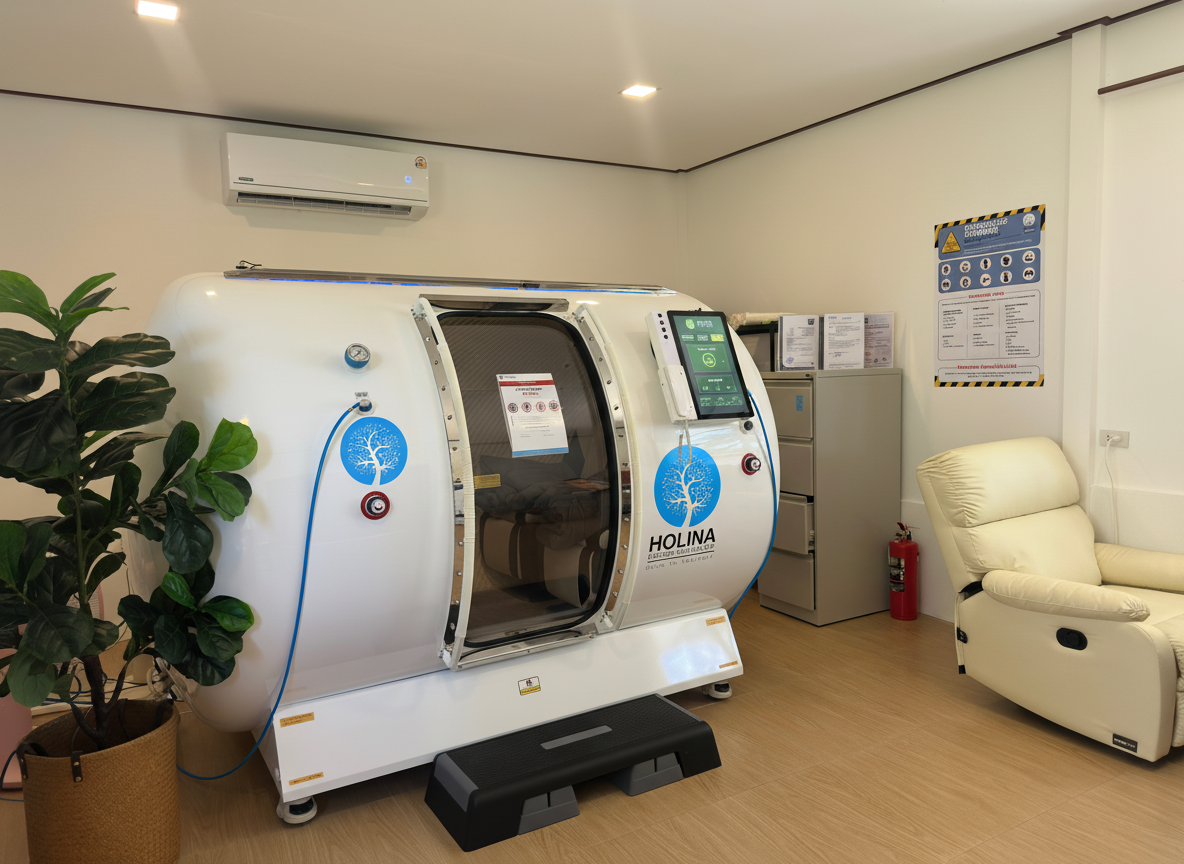
At Holina Clinic, our chamber operates at 2.0 ATA — a well-established pressure level that delivers meaningful therapeutic benefit while remaining appropriate for a wide range of clients, from those recovering from illness or injury to those pursuing performance and longevity goals.
The principle is straightforward: under increased pressure, oxygen dissolves directly into the blood plasma, cerebrospinal fluid, and lymphatic fluid — not just the red blood cells. This allows oxygen to reach tissues that are poorly perfused or damaged, areas where normal circulation cannot deliver adequate supply. The result is a cascade of biological responses: reduced inflammation, accelerated cell repair, stimulation of new blood vessel growth, and enhanced immune function.
If you are new to the concept, you may find it useful to read our introductory guide to HBOT before going further. This pillar post assumes a foundational familiarity and goes considerably deeper into both the science and the clinical applications.
The Science Behind HBOT: How Pressurised Oxygen Heals the Body
To understand why HBOT works, it helps to understand what oxygen actually does at the cellular level. Every cell in the body requires oxygen to produce energy through a process called oxidative phosphorylation. When tissues are hypoxic — starved of oxygen, whether from injury, poor circulation, chronic inflammation, or disease — cellular function degrades. Healing stalls. Inflammation becomes chronic rather than acute. The downstream effects can be wide-ranging and persistent.
HBOT addresses this at source. Under hyperbaric conditions, Henry’s Law of physics dictates that gases dissolve into liquids in proportion to the pressure applied. This means that at 2.0 ATA, significantly more oxygen enters the plasma than under normal conditions — enough to supersaturate tissues that red blood cells cannot easily reach.
Several key biological mechanisms are now well-documented in the research literature. First, HBOT triggers the upregulation of hypoxia-inducible factors (HIFs), proteins that stimulate angiogenesis — the formation of new blood vessels. This is particularly relevant in chronic wound healing and post-stroke recovery, where re-establishing blood supply is critical. Second, HBOT has been shown to modulate the inflammatory response, reducing the production of pro-inflammatory cytokines while supporting the resolution phase of healing. Third, and perhaps most intriguingly for those interested in longevity, research suggests that repeated hyperbaric exposures can stimulate the proliferation of stem cells — the body’s own repair and regeneration cells — from bone marrow into the bloodstream.
“Hyperbaric oxygen therapy does not simply flood the body with oxygen — it creates a controlled biological stress that activates dormant repair pathways, prompting the body to rebuild tissue it had essentially given up on.”
These mechanisms collectively explain why HBOT has applications across such a broad range of conditions. It is not acting on a single pathway or symptom — it is enhancing the body’s fundamental capacity to heal itself.
Conditions HBOT Can Help With
HBOT has a long history in mainstream medicine, most notably in the treatment of decompression sickness in divers and carbon monoxide poisoning. These indications are well-established and uncontroversial. Beyond these, a growing body of peer-reviewed research supports HBOT as a useful adjunct therapy — and in some cases a primary intervention — for a wider range of conditions.
It is important to be clear: HBOT is not a cure for any of the conditions listed below, and it is always most effective when integrated into a broader therapeutic plan. With that caveat clearly stated, research suggests HBOT may offer meaningful benefit for:
- Chronic wounds and diabetic foot ulcers — one of the most established medical applications, with strong evidence for promoting tissue repair where circulation is compromised
- Traumatic brain injury (TBI) — studies indicate improvements in cognitive function, mood, and neurological symptoms in TBI patients following structured HBOT protocols
- Stroke rehabilitation — research suggests HBOT can support neuroplasticity and functional recovery in the post-acute phase
- Post-COVID syndrome (Long COVID) — emerging evidence points to improvements in fatigue, brain fog, and cognitive symptoms in long COVID patients after HBOT courses
- Fibromyalgia and chronic fatigue syndrome — clinical trials have shown reductions in pain scores and improvements in quality of life
- Autism spectrum disorder — research is ongoing and results are mixed, but some studies report improvements in social interaction and behaviour
- Radiation injury — HBOT is increasingly used to treat tissue damage caused by radiotherapy, particularly in head, neck, and pelvic cancers
- Osteomyelitis (bone infection) — enhanced oxygen delivery supports antibiotic effectiveness and immune function in hard-to-treat infections
- Inflammatory bowel disease — early research suggests HBOT may help reduce mucosal inflammation in Crohn’s disease and ulcerative colitis
- Sports injuries and post-surgical recovery — reduced inflammation and accelerated tissue repair are consistently observed in athletic recovery contexts
- Anxiety, PTSD, and treatment-resistant depression — emerging neuropsychiatric research is exploring HBOT’s effects on the central nervous system and mood regulation
- Age-related cognitive decline and dementia prevention — early-stage research suggests potential neuroprotective effects with repeated hyperbaric exposure
At Holina Clinic, we conduct an initial assessment with every client to establish whether HBOT is appropriate for their specific situation and goals. Our clinical team will advise on the most suitable protocol and, where relevant, recommend complementary therapies to maximise outcomes.
HBOT for Brain Health and Cognitive Performance
Of all the areas where HBOT research is advancing most rapidly, brain health is perhaps the most compelling. The brain accounts for roughly 20% of the body’s total oxygen consumption despite comprising only about 2% of its mass. It is exquisitely sensitive to oxygen availability — and correspondingly, to the enhanced delivery that HBOT provides.
In cases of acquired brain injury, whether from trauma, stroke, or hypoxic events, HBOT is thought to reactivate dormant neurons in the penumbra — the zone of injured but not yet dead tissue surrounding the primary damage site. Studies indicate that HBOT can increase cerebral blood flow, reduce neuroinflammation, and promote the growth of new neural connections through a process called neuroplasticity.
Beyond injury recovery, there is growing interest in HBOT as a tool for optimising cognitive performance in healthy individuals. Research published in the journal Aging found that a structured course of HBOT in healthy older adults produced measurable improvements in attention, processing speed, and executive function — alongside detectable changes in telomere length and senescent cell burden, two established biomarkers of biological ageing.
For clients at Holina Clinic who are interested in cognitive performance, we often recommend pairing HBOT with neurofeedback brain training — a complementary approach that works directly with the brain’s electrical activity to reinforce desirable patterns. The combination of enhanced cerebral oxygenation from HBOT and the targeted neural conditioning of neurofeedback can produce synergistic results that neither approach achieves alone.
It is also worth noting the increasing evidence base around HBOT for post-COVID brain fog — a symptom cluster that has affected a significant number of people globally. Several clinical trials are now underway, and early results suggest that a course of HBOT can meaningfully reduce cognitive symptoms in this group.
HBOT for Athletes and Physical Recovery
The performance and recovery applications of HBOT have attracted serious attention from elite sport, with practitioners across football, rugby, combat sports, and endurance athletics incorporating hyperbaric therapy into their recovery protocols. The reasons are biologically sound: intense physical exercise generates oxidative stress and localised inflammation, and the tissues most affected — muscle fibres, tendons, connective tissue — are precisely the ones that benefit from enhanced oxygen delivery.
For athletes, the most immediate benefit of HBOT is the acceleration of recovery between training sessions or after competition. Research suggests that HBOT reduces the inflammatory response to exercise-induced muscle damage, shortening the window of reduced performance that follows high-intensity effort. This means athletes can train harder, recover faster, and maintain a higher quality of preparation over time.
Beyond acute recovery, HBOT supports the repair of soft tissue injuries — including ligament and tendon damage, which notoriously heals slowly due to poor blood supply. By increasing oxygen availability in these avascular or poorly vascularised structures, HBOT can meaningfully accelerate healing timelines. Post-surgical recovery, including joint reconstruction and cartilage repair, is another area where HBOT is increasingly used.
Koh Phangan’s setting is particularly well-suited to athletic recovery work. The island’s combination of warm climate, low stress environment, and access to high-quality nutrition creates ideal conditions for regenerative protocols. We regularly work with competitive athletes and fitness professionals who visit specifically to undertake intensive recovery programmes combining HBOT with physiotherapy, nutritional support, and other regenerative therapies available at the clinic.
HBOT for General Wellness and Anti-Ageing
Perhaps the fastest-growing area of HBOT interest is not clinical at all — it is the use of hyperbaric therapy as a proactive wellness and longevity tool by otherwise healthy individuals who want to age well, maintain cognitive sharpness, and keep their bodies functioning at a high level for as long as possible.
This application is supported by emerging science around the hallmarks of ageing — the biological processes that drive cellular decline over time. Several of these hallmarks are directly addressed by HBOT. Chronic low-grade inflammation, sometimes called “inflammaging,” is modulated by hyperbaric exposure. Mitochondrial dysfunction — impaired energy production at the cellular level — is improved when cells receive enhanced oxygen supply. And as noted earlier, research suggests that repeated HBOT exposure can influence telomere length and reduce the burden of senescent cells, two of the most studied markers of biological age.
For wellness-focused guests visiting Holina Clinic — many of whom travel to Thailand specifically to undertake a focused period of self-investment — HBOT fits naturally into a broader protocol that might also include biofeedback therapy, nutritional medicine, breathwork, and mindfulness practices. The clinic’s island location means that the environmental factors supporting recovery — reduced cortisol, natural light, clean air, unhurried pace — amplify the therapeutic work being done in session.
It is important to set realistic expectations. HBOT is not a fountain of youth, and no responsible clinician would present it as such. What the evidence does suggest is that regular hyperbaric exposure, as part of a comprehensive lifestyle and wellness strategy, can meaningfully support healthspan — the number of years spent in good health — not merely lifespan.
What to Expect During an HBOT Session at Holina Clinic
If you have never experienced HBOT before, knowing what to expect can make a significant difference to how comfortable and prepared you feel going in. The process is considerably more straightforward than many people anticipate.
Sessions at Holina Clinic run for 60 to 90 minutes, depending on the protocol prescribed for your specific goals or condition. Before your first session, you will meet with a member of our clinical team to review your health history, confirm there are no contraindications, and discuss what you are hoping to achieve. This intake process ensures your programme is calibrated appropriately from the outset.
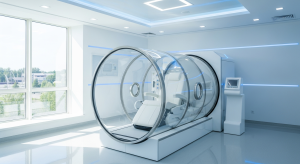
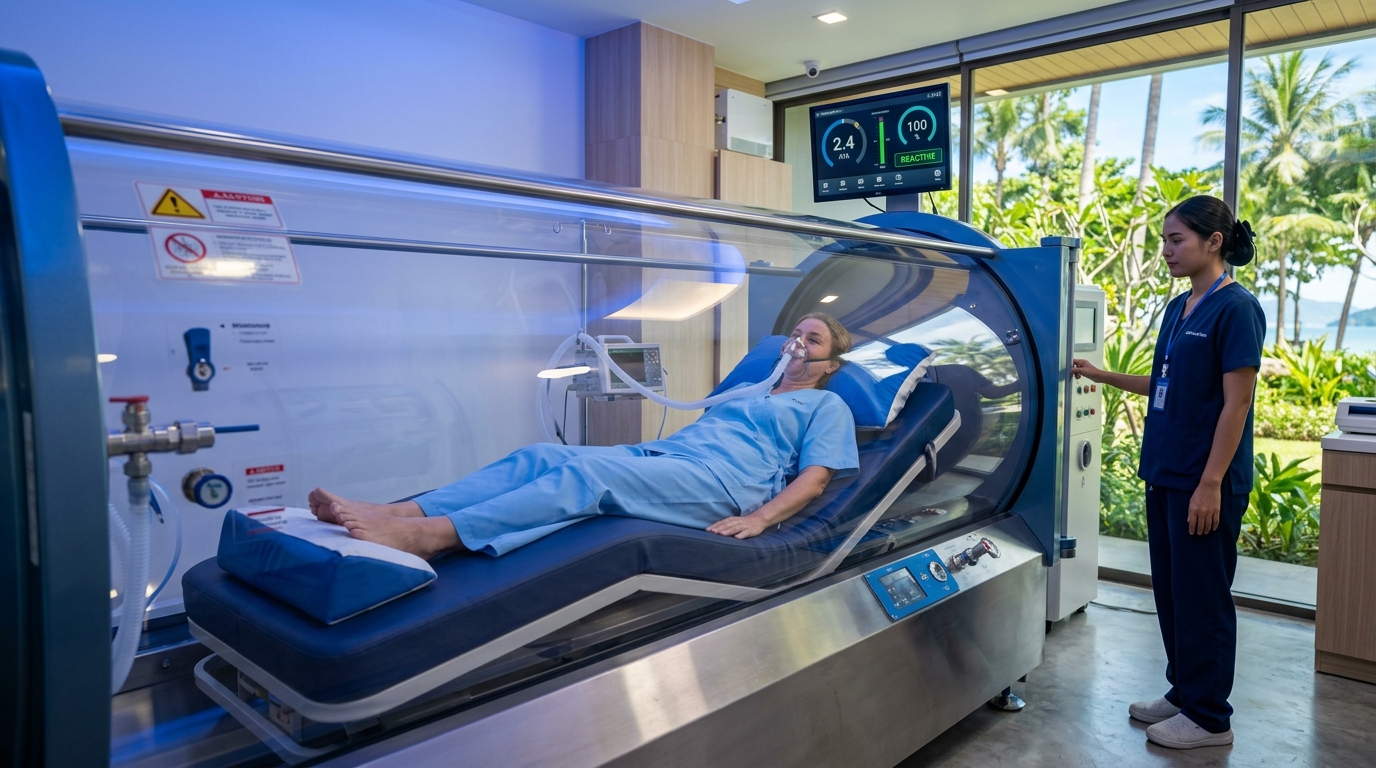
On the day of your session, you will change into provided clothing — natural fibres only, as a standard safety precaution — and enter the chamber. Our chamber is a comfortable, well-lit space with clear acrylic panels, so there is no sense of confinement. You will breathe 100% oxygen through a mask or hood throughout the session. Most clients find the experience deeply relaxing; many sleep.
As the pressure increases to 2.0 ATA during the initial phase — a process called compression — you may notice a sensation of fullness in your ears, similar to what you experience when descending in an aircraft. The technique for equalising pressure is simple and will be explained by your clinician beforehand. For the vast majority of clients, this is a minor and manageable sensation that resolves quickly once you equalise. The session runs at pressure for the prescribed period, then the pressure is gradually reduced during the decompression phase before the chamber opens.
After a session, most clients report feeling relaxed and clear-headed. Some describe a mild fatigue, particularly in the early sessions, which is a normal physiological response as the body adjusts to the elevated oxygen environment. This typically passes within a few sessions as your body acclimatises to the protocol.
How Many Sessions Do You Need?
This is one of the most common questions we receive, and the honest answer is that it depends significantly on why you are undertaking HBOT in the first place.
For acute conditions — a recent injury, post-surgical recovery, an acute infection — shorter courses of ten to twenty sessions may be sufficient to achieve the desired therapeutic outcome. For chronic conditions, including neurological injury, long COVID, or complex wound healing, protocols of forty sessions or more are common in the clinical literature, and some clients require ongoing maintenance therapy.
For wellness and anti-ageing applications, a common approach is an intensive block — typically twenty to forty sessions delivered over two to four weeks — followed by periodic maintenance sessions, perhaps monthly or quarterly. This mirrors the protocols used in much of the research on HBOT’s effects on biological age markers.
At Holina Clinic, we design bespoke programmes rather than applying a one-size-fits-all approach. Your initial assessment will include a discussion of realistic treatment timescales, and we will review your progress regularly throughout your programme to ensure the protocol remains appropriate. For guests travelling to Koh Phangan from abroad, we are experienced in designing intensive residential programmes that deliver meaningful clinical benefit within a defined time window — typically two to four weeks.
It is worth noting that the effects of HBOT are cumulative. A single session will produce measurable physiological changes, but the most significant and durable benefits emerge over a course of treatment. Consistency and adherence to the prescribed programme are important factors in outcomes.
Is HBOT Safe? Side Effects and Contraindications
When administered within appropriate clinical protocols, HBOT has an excellent safety record. It is a non-invasive therapy with no pharmaceutical agents involved, and serious adverse events are rare when standard screening and operational protocols are followed.
The most commonly reported side effects are mild and transient. These include ear or sinus discomfort during compression, temporary changes in vision (typically mild short-sightedness that resolves after completing a course of treatment), and occasional lightheadedness or fatigue after early sessions. These are well-understood physiological responses rather than indicators of harm.
Serious risks are uncommon but do exist. Oxygen toxicity can occur if sessions are prolonged beyond recommended limits or if pressure levels are too high — both of which are avoided by following evidence-based protocols. Middle ear barotrauma is possible if equalisation is not managed appropriately, though this is preventable with proper technique and client preparation. Fire risk, while often cited in public discussions of HBOT, is effectively eliminated by strict protocols around clothing, materials, and chamber maintenance.
There are absolute contraindications that preclude HBOT for some individuals. These include untreated pneumothorax (collapsed lung), certain types of ear surgery, and active or recent chemotherapy with specific agents that are sensitised to oxygen toxicity. Relative contraindications — situations requiring careful clinical judgement — include pregnancy, severe claustrophobia, certain cardiac conditions, and uncontrolled seizure disorders. Our clinical team will identify any contraindications during your intake assessment.
Holina Clinic operates strict safety protocols in line with international hyperbaric medicine standards. Our team is trained in hyperbaric safety, and no session proceeds without proper client screening and preparation.
Combining HBOT With Other Holina Therapies
One of the genuine advantages of receiving HBOT at a specialist regenerative medicine clinic — rather than a standalone hyperbaric facility — is the ability to integrate it with a broader therapeutic ecosystem. At Holina Clinic, we approach each client’s programme holistically, and many of our most impactful outcomes come from thoughtfully combining modalities.
For clients focused on brain health and cognitive performance, pairing HBOT with neurofeedback brain training creates a complementary loop: HBOT enhances cerebral blood flow and reduces neuroinflammation, while neurofeedback directly trains the brain’s electrical patterns toward healthier, more regulated states. For those dealing with stress, anxiety, or nervous system dysregulation, integrating biofeedback therapy alongside HBOT allows clients to develop real-time awareness and control of their physiological stress response — a skill that supports and extends the benefits of hyperbaric work.
Physical recovery clients often benefit from the combination of HBOT and physiotherapy, particularly when recovering from musculoskeletal injury or post-surgical rehabilitation. Nutritional medicine and IV nutrient therapy are also commonly paired with HBOT, providing the raw materials — amino acids, micronutrients, antioxidants — that the body needs to make the most of the enhanced repair environment that HBOT creates.
For residential wellness guests, the broader Holina environment — the island pace of Koh Phangan, access to clean nutrition, movement, and mindfulness — is itself a therapeutic factor. We encourage clients to treat their time at the clinic as an integrated programme rather than a series of isolated appointments. The cumulative effect of multiple modalities, delivered in a genuinely restorative environment, consistently produces better outcomes than any single intervention alone.
Frequently Asked Questions
Is HBOT painful?
No. The most common sensation is mild pressure in the ears during compression, similar to a flight descent. Most clients find sessions relaxing, and many sleep through them.
Can I use HBOT if I am not unwell — just interested in wellness?
Absolutely. A significant proportion of our HBOT clients are healthy individuals pursuing performance optimisation, cognitive enhancement, or proactive longevity support. An initial assessment will confirm suitability and help us design the right programme.
How soon will I notice results?
This varies by individual and indication. Some clients notice improved sleep or energy levels within the first few sessions. More substantive changes — particularly in neurological or tissue repair contexts — typically become apparent after ten to twenty sessions. The full benefit of a course is often felt in the weeks following completion, as the body continues to respond to the therapy.
Do I need a referral from my doctor?
A referral is not required to enquire or book a consultation at Holina Clinic. However, if you have a significant medical history, we will likely wish to liaise with your treating physician as part of the intake process. We can facilitate this directly if helpful.
Can HBOT be combined with other medications I am taking?
Most medications are compatible with HBOT. However, a small number of pharmaceutical agents have interactions with hyperbaric oxygen and must be reviewed prior to commencing treatment. Our clinical team will conduct a full medication review during your intake assessment.
How do I get started?
The first step is an initial consultation, either in person at the clinic or via video call if you are planning a visit from abroad. We will take a full health history, discuss your goals, and outline a recommended programme. To arrange your consultation, please visit holinaclinic.com/contact/ — our team will be in touch promptly to arrange a time that suits you.
Whether you are managing a specific health condition, recovering from injury, or simply committed to ageing well and performing at your best, HBOT may be one of the most valuable tools available to you. We look forward to helping you explore what it can do.