The surgical date is set. The pre-operative workup has been completed. The consultant has explained the procedure, the recovery timeline, and the anticipated outcomes with the polite confidence of someone who has explained the same things a thousand times. The patient is, by the standards of standard surgical pathways, fully prepared. And yet there is a category of preparation that the standard pre-operative workup does not engage with — the systematic optimisation of the patient’s underlying physiological state before they enter theatre.
The clinical literature on pre-habilitation and surgical optimisation has expanded considerably in the past decade. Studies in cardiac surgery, oncological surgery, orthopaedic surgery, and general surgery have all documented that patients who enter the procedure in a more optimised physiological state recover faster, with fewer complications, with better long-term functional outcomes. The mechanisms are well-characterised. The interventions are available. And yet the standard pre-operative pathway in most healthcare systems offers very little of what this evidence supports.
This piece outlines what comprehensive pre-surgery optimisation actually involves, what the evidence base supports, and what the Holina Clinic six-week protocol can do for patients who have time to prepare deliberately before surgery.
What the Standard Pre-Operative Pathway Misses
The pre-habilitation evidence is robust. A 2019 meta-analysis in BJA: British Journal of Anaesthesia found that structured prehabilitation programmes meaningfully reduce postoperative complications and length of stay across multiple surgical categories, with the strongest effects in cancer, cardiac, and major orthopaedic surgery.
The standard pre-operative workup in most healthcare systems is structured around risk identification — anaesthetic risk, cardiac risk, bleeding risk — rather than optimisation. The patient is assessed for whether they are safe enough to operate on. They are not, in most cases, assessed for whether their physiological state is the best it could be before surgery.
The opportunity this leaves on the table is substantial. The body that enters surgery in an optimised state — well-nourished, low inflammatory load, robust mitochondrial function, adequate micronutrient stores, balanced gut microbiome, well-rested, with adequate cardiovascular fitness — recovers measurably better than the body that enters surgery in a suboptimal state. The differences are not marginal. The surgical literature documents shorter hospital stays, fewer post-operative complications, faster wound healing, less post-operative cognitive dysfunction, and better long-term functional recovery in patients who have undertaken structured prehabilitation.
For elective procedures with a planning window of six weeks or more, this opportunity is fully available.
What the Six-Week Protocol Involves
The Holina Clinic pre-surgery optimisation protocol is delivered over six weeks where the surgical timeline allows. The protocol is calibrated to the specific surgery and the patient’s specific starting point, but the typical elements are as follows.
Comprehensive baseline assessment in week one. Detailed laboratory workup including inflammatory markers, comprehensive metabolic panel, micronutrient status, hormonal profile where relevant to the surgery, and where appropriate, body composition assessment. Cardiovascular and respiratory fitness assessment. Cognitive baseline where the surgery involves anaesthetic exposure expected to risk post-operative cognitive dysfunction.
Targeted nutritional optimisation through weeks one to six. Micronutrient correction for any documented deficits, often through both oral and IV protocols. Protein intake optimisation to support tissue building and immune function. Anti-inflammatory dietary protocol calibrated to the patient’s tolerance and preference. Where appropriate, specific supplementation including omega-3 fatty acids at clinical doses, vitamin D to therapeutic levels, magnesium, and others matched to the picture.
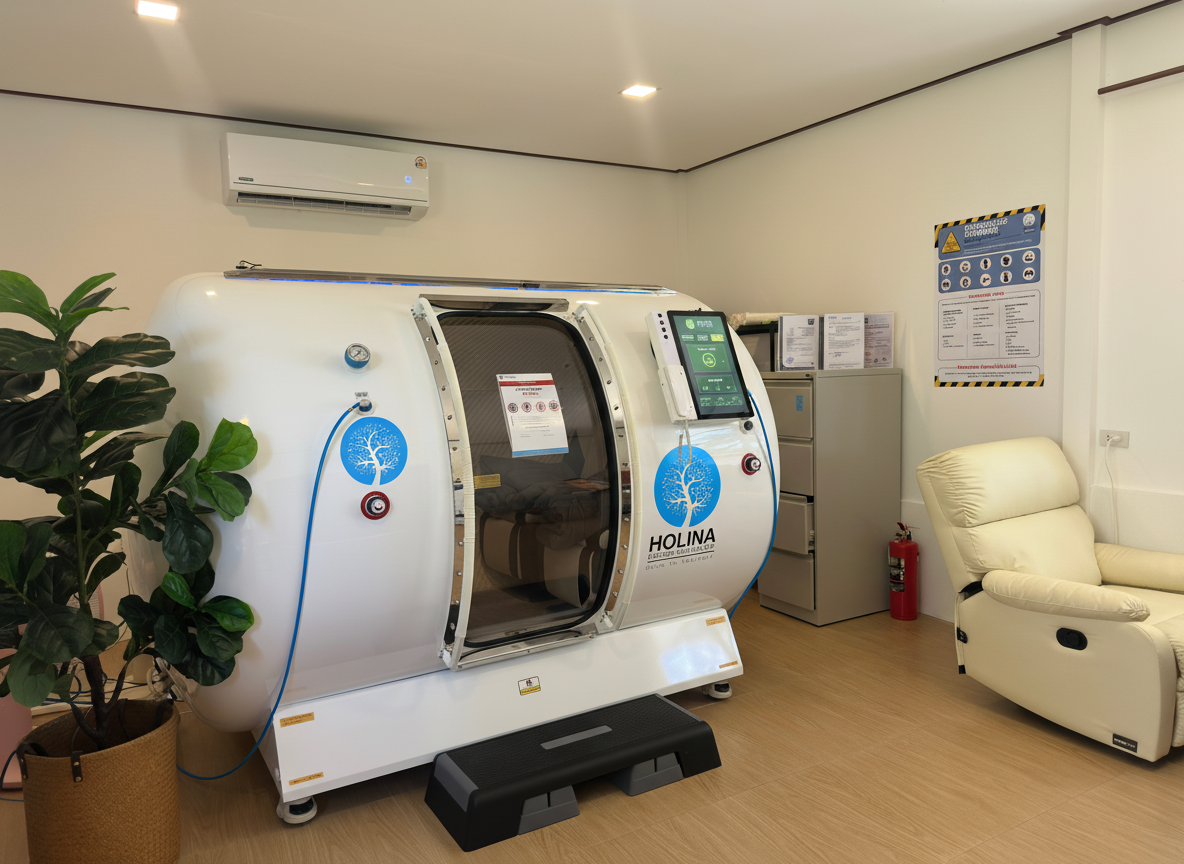
Hyperbaric oxygen therapy through weeks two to six where appropriate. A pre-operative HBOT course supports mitochondrial function, reduces inflammatory load, supports cardiovascular health, and primes the body’s tissue repair capacity for the demands of recovery. The literature on pre-operative HBOT in specific surgical contexts is increasingly supportive, particularly for surgeries involving compromised vascular supply, reconstructive procedures, and major orthopaedic interventions.
NAD+ infusion therapy where the picture supports it, particularly for patients over fifty whose endogenous NAD+ is typically reduced from the levels associated with optimal recovery. A short pre-operative NAD+ course supports mitochondrial function and cellular repair capacity.
Structured exercise programming calibrated to the patient’s capacity and the surgery. Aerobic capacity is consistently associated with surgical outcomes. The protocol is calibrated to produce measurable improvement in functional capacity without risking injury or fatigue that could compromise the surgery itself.
Sleep optimisation through weeks one to six. Sleep is one of the most underweighted variables in surgical recovery, and a patient who enters surgery well-rested with stable sleep architecture recovers measurably better than a sleep-deprived patient.
Stress and autonomic regulation work where appropriate. The autonomic state entering surgery influences anaesthetic dose response, cardiovascular stability during the procedure, and post-operative inflammatory response. Calming the system pre-operatively is not a luxury — it is part of the optimisation.
What Outcomes the Protocol Produces
The outcomes we observe in patients who have completed the protocol before surgery share consistent features. Shorter hospital stays compared to standard recovery patterns for the same procedures. Reduced post-operative complications across categories, including infection, delayed wound healing, and respiratory complications. Faster return to baseline function. Less post-operative cognitive dysfunction, particularly in older patients undergoing surgeries with significant anaesthetic exposure. Less post-operative pain medication required, with corresponding reduction in the side effect burden of those medications.
These outcomes are consistent with the broader surgical pre-habilitation literature. The clinical effect of entering surgery in an optimised state is real, well-documented, and reliably reproducible.
Who This Is Appropriate For
Patients with elective surgery scheduled six or more weeks ahead. Patients undergoing major cardiac, oncological, orthopaedic, or reconstructive procedures where the recovery trajectory is significant. Older patients where the routine recovery curve carries higher risk of complications and prolonged convalescence. Patients with multiple comorbidities where the surgical recovery is expected to be more demanding. Patients who have undergone previous surgery with recovery that did not meet their expectations and who want to do the next one differently. High-performing professionals for whom rapid return to baseline function is particularly valuable.
The protocol is less appropriate for emergency or urgent surgery where the planning window is insufficient, and for patients whose underlying condition or surgical context contraindicates one or more of the protocol elements. These factors are assessed in initial consultation.
How the Protocol Is Delivered
Patients undertaking the pre-surgery optimisation protocol can do so on an outpatient basis with regular visits to the clinic, or residentially on the Holina campus where the integrated environment supports the work more fully. Residential delivery is particularly useful for patients whose home environment is structurally limiting the optimisation — high stress, poor sleep environment, dietary or activity constraints — and for those who want the most concentrated version of the protocol.
Coordination with the surgical team is undertaken at the outset, with patient consent. The intention is not to position our work in opposition to surgical care; it is to ensure the patient enters the surgical care in the best possible physiological state.
A Closing Note
If you have surgery on the horizon and are wondering whether there is anything you can do beyond the standard pre-operative preparation, the answer is that there is substantial structured work available, with a real evidence base, that meaningfully changes the recovery trajectory. The first conversation with our clinical team is the beginning of finding out what the specific protocol for your surgery and your starting point would look like.