The conversation about longevity has, over the past five years, become one of the more saturated wellness topics, with substantial confusion between what the scientific literature actually supports and what various market actors are promoting. Behind the noise, however, a coherent clinical framework for adult longevity has emerged, with identifiable mechanisms, evidence-based interventions, and meaningful improvements in healthspan and lifespan that careful implementation can produce.
For adults entering their fifties and beyond, this framework is increasingly available outside specialist longevity clinics. The protocols at Holina Clinic for patients in this age range are designed around what the actual evidence supports — what produces measurable improvement in the biomarkers that predict healthspan, what addresses the mechanisms of biological ageing, and what reduces the risk of the diseases that determine quality of life in later decades.
This piece outlines what a serious clinical longevity protocol involves and what adults in their fifties can do now to influence the next thirty years.
What Actually Determines Healthspan in Later Decades
The integrated longevity approach is increasingly evidence-supported. World Health Organization data and US National Institute on Aging guidance now converge around a small set of high-leverage interventions — cardiovascular health, muscle preservation, metabolic optimisation, social engagement, and sleep architecture — as the strongest documented determinants of healthspan in adults over 50.
The literature on healthspan determinants in adults over fifty consistently identifies a relatively small number of factors as the most clinically meaningful. Cardiovascular health, including blood pressure, cholesterol particles, inflammatory markers, and arterial function. Metabolic health, including insulin sensitivity, blood sugar regulation, and the broader metabolic flexibility that the body’s response to challenge depends on. Body composition, particularly the preservation of muscle mass and bone density that the natural ageing trajectory degrades. Cognitive function and the underlying neurological resilience. Sleep architecture and the recovery and consolidation it supports. Mental health and the relational engagement that consistently predicts later-life outcomes. The cumulative load of subclinical inflammation and oxidative stress that accelerates the ageing process.
These factors are not independent. They interact. Addressing them in isolation produces partial results. Addressing them as an integrated stack, calibrated to the individual patient, produces the substantial outcomes that careful longevity work can deliver.
What Comprehensive Baseline Assessment Includes
The longevity assessment at Holina Clinic for adults in their fifties extends substantially beyond what a standard annual physical includes. The cardiovascular workup goes beyond basic lipid panels to include particle-level cholesterol analysis, advanced inflammatory markers including high-sensitivity CRP and where relevant lipoprotein(a), and where appropriate, advanced imaging including coronary artery calcium scoring.
Metabolic assessment includes fasting insulin and glucose, HbA1c, continuous glucose monitoring where indicated for several days, and assessment of metabolic flexibility through structured testing. The information from this workup typically identifies opportunities for optimisation that the standard pathway does not.
Body composition assessment using accurate methods including DEXA scanning where available, with attention to muscle mass, bone density, and visceral fat. These metrics decline naturally with age, and tracking them allows for intervention before the decline produces clinical consequences.
Hormonal assessment as outlined in our other clinical work, with attention to the specific changes that occur in this decade.
Cognitive baseline through structured testing, both to document current function and to track changes over time.
Comprehensive micronutrient assessment, inflammatory marker panel, and where appropriate, biological age estimation through measures including telomere length and epigenetic clocks, while recognising the interpretive limitations of these emerging metrics.
The Stack That the Evidence Supports
The interventions that comprise a clinical longevity protocol for adults in their fifties draw on several modalities. The relative emphasis depends on the assessment findings.
Cardiovascular and metabolic optimisation through targeted dietary, exercise, and where appropriate, pharmacological intervention. The evidence base for several pharmacological interventions in this category, including specific cholesterol-lowering agents and metabolic agents, supports their use in appropriately selected patients beyond their original indications.
Muscle and bone preservation through structured resistance training. The evidence for resistance training in adults over fifty is substantial and consistent. It is one of the few interventions that reliably influences healthspan across multiple dimensions, and its underutilisation in this age group is one of the more correctable gaps in contemporary health practice.
Cognitive maintenance through the protocols outlined elsewhere in our clinical work. The combination of HBOT, NAD+ where indicated, comprehensive cardiovascular and metabolic optimisation, and targeted cognitive engagement is well-supported by the available literature.
Sleep architecture optimisation, because sleep quality is one of the strongest individual predictors of healthspan outcomes. The protocols are calibrated to the patient’s specific picture.
Inflammatory burden reduction through dietary, lifestyle, and where appropriate, specific interventions. Chronic low-grade inflammation is one of the central mechanisms of biological ageing, and addressing it produces measurable improvement across multiple biomarkers.
Hormonal optimisation as outlined in our forties work, continued and adapted for the specific changes of the fifties and beyond.
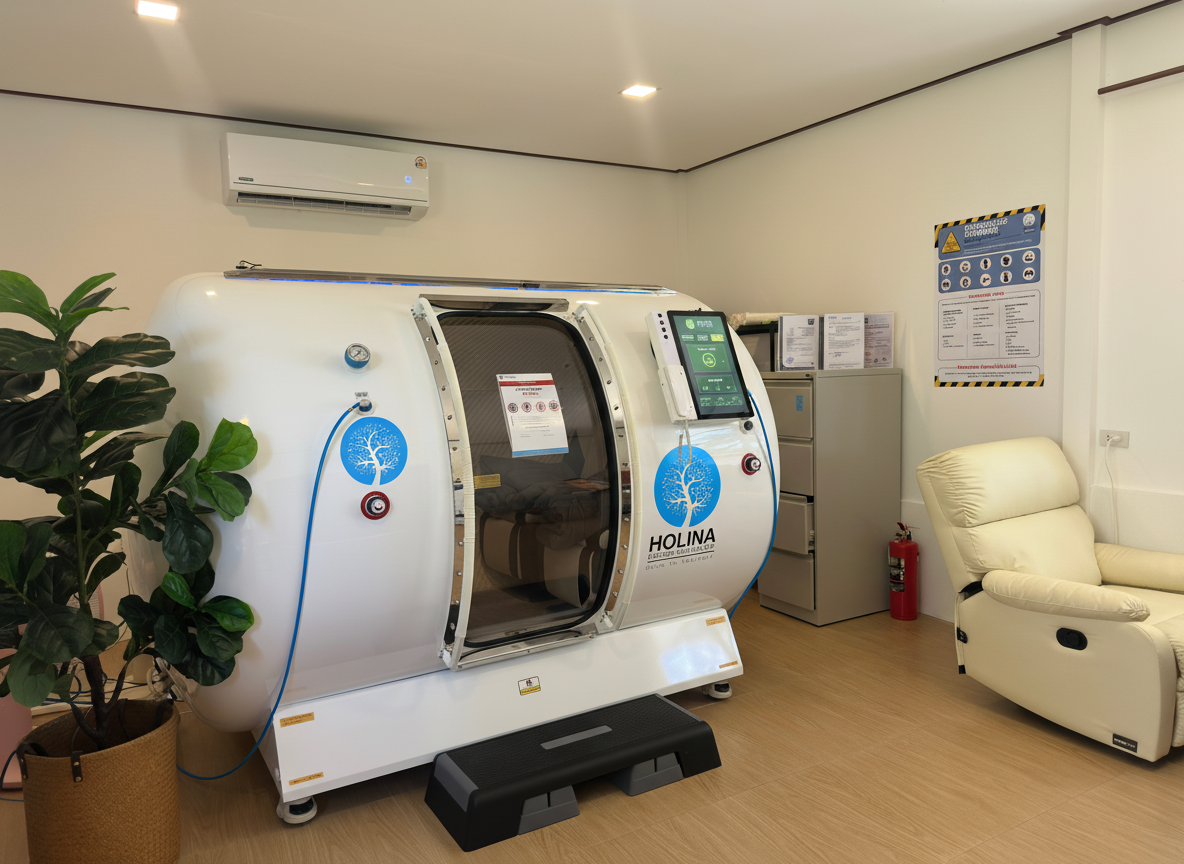
Where the picture supports it, hyperbaric oxygen therapy as a periodic intervention. The literature on HBOT in healthy ageing adults documents improvements in cognitive function, cardiovascular markers, and several other longevity-relevant outcomes.
NAD+ infusion therapy where the metabolic picture warrants. The age-related decline in NAD+ is well-documented and is one of the more responsive aspects of the ageing process to targeted intervention.
Specific peptide protocols where the picture supports them, with appropriate medical supervision.
The combined protocol is delivered over an initial intensive window of several weeks, with ongoing maintenance and reassessment at structured intervals. The work is not a one-time intervention. It is a sustained relationship with the patient’s evolving health picture.
What Outcomes the Protocol Produces
For patients who undertake a comprehensive longevity protocol in their fifties, the outcomes are measurable across multiple dimensions. Cardiovascular risk markers improve. Metabolic markers normalise where they had been drifting. Body composition shifts toward the preservation of muscle and bone that the standard trajectory does not produce. Cognitive function maintains or improves rather than gradually declining. Sleep deepens. Energy levels improve. The general felt sense of operating at the upper end of what the chronological age permits, rather than the average, becomes the baseline.
The outcomes are not magic, and they require sustained engagement. Patients seeking single-session interventions or quick fixes are typically not the right fit for this category of work. Patients seeking a comprehensive, evidence-based, sustained approach to their next thirty years generally are.
Who This Is Appropriate For
Adults entering their fifties who want to actively influence their healthspan trajectory rather than allowing it to unfold along the average curve. Patients with documented changes in their fifties that they want to address comprehensively. High-functioning professionals whose careers and lives carry sufficient demand that maintaining capacity matters substantially. Patients with family history of conditions they want to delay or prevent. Patients who have undertaken various aspects of longevity-related work in fragmented form and want to integrate it into a coherent clinical protocol.
The protocol is not appropriate for patients with active acute medical conditions that require direct treatment first, for those seeking interventions without the assessment substrate, and for those whose framing of longevity is closer to wellness market than clinical medicine. The work we do at Holina Clinic is clinical, evidence-based, and grounded in current medical literature.
A Closing Note
If you are entering your fifties and want the next decades to look meaningfully different from the trajectory the standard pathway would produce, the comprehensive clinical longevity work that supports this is available. The first conversation with our clinical team is the beginning of finding out what your specific picture is and what an integrated protocol would look like for you.