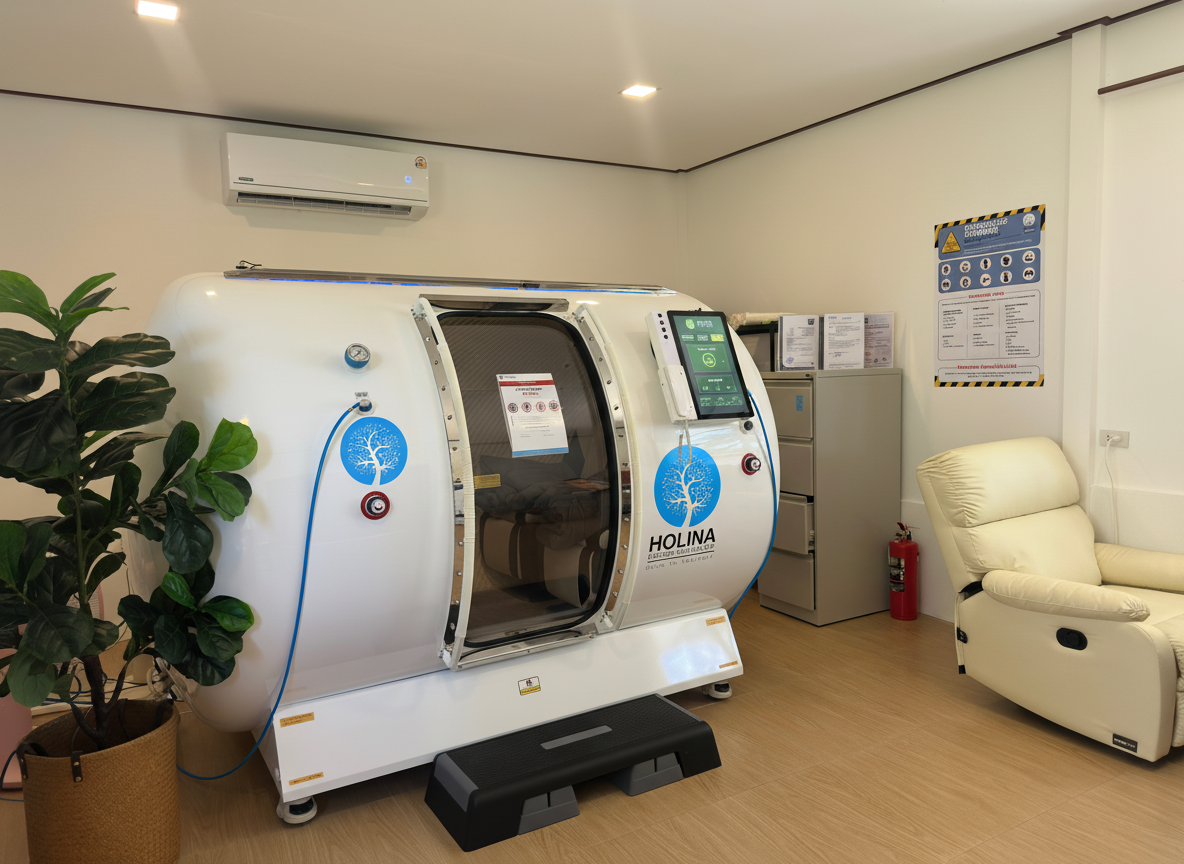
Hyperbaric oxygen therapy — once confined to navy decompression chambers and hospital burn units — has emerged as one of the most compelling evidence-based interventions in modern integrative medicine. At Holina Clinic on Koh Phangan, Thailand, we have witnessed firsthand how HBOT treatment is quietly transforming the way physicians approach recovery, cellular repair, and systemic wellness for patients who demand more than conventional medicine alone can offer.
The underlying principle is elegantly simple, yet the physiological cascade it initiates is profound. By breathing pure oxygen inside a pressurised chamber at levels exceeding normal atmospheric pressure, the body is able to dissolve significantly greater concentrations of oxygen directly into the plasma, cerebrospinal fluid, lymphatic system, and tissues. This oxygen saturation reaches areas that red blood cells — under ordinary circumstances — simply cannot access. The result is a measurable shift in the biological environment at a cellular level, one that has attracted serious clinical attention from researchers, sports medicine specialists, and longevity-focused physicians around the world.
HBOT benefits extend across a remarkably broad spectrum of clinical applications. Peer-reviewed research continues to build a compelling body of evidence supporting its role in accelerating wound healing, reducing systemic inflammation, supporting neurological recovery, enhancing athletic performance and tissue repair, and contributing to protocols designed to address the complex burden of long-term illness. Each of these applications is underpinned not by anecdote, but by measurable, reproducible physiological responses.
What distinguishes HBOT Koh Phangan at Holina Clinic is the rigorous clinical framework within which every session is delivered. Hyperbaric oxygen therapy here is never approached as a standalone wellness trend. It is integrated into personalised, physician-supervised treatment programmes, carefully calibrated to each patient’s unique health profile, therapeutic goals, and medical history. Our clinical team conducts thorough assessments before any protocol begins, ensuring that every pressure level, session duration, and treatment frequency is determined by evidence, not assumption.
Whether you are exploring HBOT for the first time or seeking to deepen your understanding of what a structured clinical programme truly involves, this guide was written to give you the precise, honest, and clinically grounded information you deserve.
What Is Hyperbaric Oxygen Therapy? The Science Behind Pressurised Healing
Hyperbaric Oxygen Therapy (HBOT) is a clinically established medical treatment in which a patient breathes 100% pure oxygen inside a pressurised chamber at atmospheric levels significantly greater than normal sea-level pressure. Under standard conditions, the air we breathe contains approximately 21% oxygen delivered at 1 atmosphere absolute (ATA). During an HBOT session, chamber pressure is typically raised to between 1.5 and 3.0 ATA depending on the clinical protocol, while the patient inhales pure oxygen through a mask, hood, or the chamber atmosphere itself. This combination of elevated pressure and pure oxygen concentration produces measurable, well-documented physiological changes that form the foundation of its therapeutic value.
To understand why pressure matters so profoundly, it helps to revisit basic physiology. Under normal circumstances, oxygen is transported through the bloodstream almost exclusively bound to haemoglobin within red blood cells. Haemoglobin becomes effectively saturated at sea level, meaning that simply breathing more oxygen through a standard mask offers limited additional benefit to tissues. Pressure changes this equation entirely. When atmospheric pressure is increased, oxygen dissolves directly into blood plasma — the fluid component of blood — independent of haemoglobin. This process follows Henry’s Law, which states that the amount of gas dissolved in a liquid is proportional to the partial pressure of that gas above the liquid. At 2.4 ATA, for example, plasma oxygen levels can increase by up to 10 to 15 times compared to breathing room air, allowing oxygen to reach tissues that compromised circulation may otherwise leave undersupplied.
This enhanced oxygen delivery triggers a cascade of clinically relevant biological responses, including:
- Neovascularisation: The stimulation of new blood vessel formation in oxygen-deprived tissues, supporting long-term repair and restoration of circulation to damaged areas.
- Reduced oedema and inflammation: Elevated oxygen concentrations cause vasoconstriction in swollen tissues, reducing fluid accumulation without compromising oxygen delivery — a paradox that makes HBOT uniquely valuable in acute injury management.
- Enhanced antimicrobial activity: High oxygen concentrations are directly toxic to certain anaerobic bacteria and significantly potentiate the bactericidal function of white blood cells, particularly neutrophils.
- Collagen synthesis acceleration: Fibroblast activity — the cellular mechanism responsible for producing collagen and connective tissue — is markedly upregulated in hyperoxic environments, supporting wound closure and structural repair.
- Stem cell mobilisation: Research indicates that repeated HBOT sessions can stimulate the release of stem cells and growth factors from bone marrow, contributing to tissue regeneration at a systemic level.
It is important to understand that HBOT is not a single standardised treatment. Protocols vary considerably based on clinical indication, patient health status, and therapeutic goals. Pressure levels, session duration — typically 60 to 90 minutes — and the total number of sessions prescribed are all determined through careful physician assessment. At a properly supervised clinical facility, treatment plans are individualised and monitored throughout the course of therapy, ensuring both safety and the greatest possible therapeutic benefit for each patient’s specific presentation.
The therapy has accumulated a robust body of peer-reviewed research over several decades and holds formal approval from bodies including the Undersea and Hyperbaric Medical Society (UHMS) and the U.S. Food and Drug Administration (FDA) for a range of specific medical conditions. Beyond these established indications, a growing body of evidence continues to explore its applications in performance recovery, cognitive health, and systemic wellness — areas where clinical practice and emerging research are actively converging.
How Hyperbaric Oxygen Therapy Works: The Physiology Behind the Pressure
To understand why hyperbaric oxygen therapy produces such clinically significant outcomes, it is essential to first understand the fundamental physiological mechanisms at work. Under normal atmospheric conditions, oxygen is transported almost exclusively by haemoglobin — the iron-containing protein within red blood cells. This system is efficient under healthy circumstances, but it has a finite carrying capacity. When tissue is damaged, inflamed, or poorly perfused, haemoglobin-bound oxygen delivery becomes insufficient to meet the metabolic demands of healing cells.
Hyperbaric oxygen therapy changes this equation entirely. Inside a pressurised chamber, patients breathe 100% pure oxygen at atmospheric pressures typically ranging from 1.5 to 3.0 atmospheres absolute (ATA). According to Henry’s Law of physics, the amount of gas dissolved in a liquid is directly proportional to the partial pressure of that gas above the liquid. In practical clinical terms, this means that at 2.0 ATA, plasma — the fluid component of blood — can carry up to ten times more dissolved oxygen than it does under normal conditions. This dissolved oxygen travels independently of haemoglobin, reaching tissues that compromised circulation would otherwise leave oxygen-deprived.
The downstream physiological effects of this enhanced oxygen delivery are both broad and well-documented in peer-reviewed literature:
- Neovascularisation: Repeated HBOT sessions stimulate the formation of new blood vessels through upregulation of vascular endothelial growth factor (VEGF), improving long-term circulation to previously ischaemic tissue.
- Fibroblast activation: Elevated tissue oxygen levels accelerate collagen synthesis by activating fibroblasts, the cells responsible for structural tissue repair and wound closure.
- Stem cell mobilisation: Clinical research published in the American Journal of Physiology has demonstrated that HBOT can increase circulating CD34+ stem cells — progenitor cells critical to tissue regeneration — by up to eightfold.
- Antimicrobial activity: Hyperoxic environments are directly hostile to anaerobic bacteria, while simultaneously enhancing the oxidative killing capacity of white blood cells, supporting the body’s immune response to infection.
- Reduction of oedema: Elevated oxygen tensions cause vasoconstriction in non-ischaemic vessels, reducing fluid accumulation in swollen tissues without compromising overall oxygen supply.
- Mitochondrial optimisation: Increased oxygen availability supports more efficient ATP production within the mitochondria, reducing cellular fatigue and supporting systemic energy metabolism.
It is worth noting that the therapeutic benefits of HBOT are cumulative and protocol-dependent. A single session may produce acute physiological changes, but sustained clinical outcomes — particularly in areas such as neurological recovery, chronic wound management, and post-surgical healing — are typically achieved through carefully structured courses of treatment. At Holina Clinic, every HBOT programme is designed and monitored by experienced medical professionals who tailor pressure protocols, session duration, and treatment frequency to each patient’s specific clinical profile. This level of physician-supervised personalisation is what distinguishes genuine therapeutic HBOT from generalised wellness applications.
The Clinical Protocols Behind Hyperbaric Oxygen Therapy: What Actually Happens During Treatment
Understanding what occurs during a hyperbaric oxygen therapy session — and why each element of the protocol matters — helps patients approach treatment with realistic expectations and a clear sense of what their body is experiencing at a physiological level. At Holina Clinic, every HBOT protocol is designed and supervised by our medical team, with session parameters tailored to the individual’s clinical presentation, health history, and therapeutic goals.
A standard HBOT session takes place inside a pressurised hyperbaric chamber, where atmospheric pressure is gradually increased to between 1.5 and 3.0 atmospheres absolute (ATA), depending on the indication being treated. At these elevated pressures, oxygen dissolves directly into the blood plasma — bypassing the usual haemoglobin-dependent transport system — and penetrates tissues that may have compromised circulation. This physical mechanism is the foundation of every therapeutic benefit hyperbaric oxygen therapy offers.
A typical session proceeds through three distinct phases:
- Pressurisation (compression): The chamber pressure increases slowly over approximately 10 to 15 minutes. Patients may notice a sensation of fullness in the ears, similar to descending in an aircraft. Our clinical team guides patients through pressure-equalisation techniques, including swallowing or gentle jaw movement, to ensure comfort throughout this phase.
- Treatment phase: Once target pressure is reached, patients breathe 100% medical-grade oxygen continuously for a prescribed period — typically 60 to 90 minutes. During this time, plasma oxygen saturation rises significantly, driving oxygen into hypoxic tissues, supporting mitochondrial function, and activating the body’s endogenous repair pathways. Patients remain comfortable and may rest, read, or listen to audio during this phase.
- Depressurisation: Pressure is gradually reduced over 10 to 15 minutes, allowing dissolved gases to safely offload from tissues. This phase requires the same careful pacing as compression to ensure physiological stability.
Session frequency and total course length vary considerably based on the clinical objective. Wound healing and neurological recovery protocols often require 20 to 40 sessions conducted daily or five times per week. Wellness, performance recovery, and anti-ageing protocols at Holina Clinic are typically structured across 10 to 20 sessions, with our physicians reviewing patient response throughout the course and adjusting parameters as indicated.
Safety monitoring is continuous and non-negotiable. Trained clinical staff maintain observation throughout every session, with emergency protocols and equipment immediately available. Contraindications — including untreated pneumothorax, certain medications, and active ear or sinus pathology — are assessed comprehensively during the pre-treatment medical consultation. This physician-led screening process ensures that every patient entering the chamber does so with a protocol that is both clinically appropriate and individually optimised.
Mild side effects, such as temporary ear discomfort or fatigue following early sessions, are normal and generally resolve quickly. Serious adverse events are rare when treatment is administered within a properly supervised clinical environment — which is precisely why institutional oversight and qualified medical staffing are non-negotiable standards at Holina Clinic.
What to Expect: The HBOT Treatment Protocol at a Clinical Setting
Understanding the clinical process behind hyperbaric oxygen therapy helps patients approach their sessions with confidence and realistic expectations. At a physician-supervised facility, HBOT is never a one-size-fits-all procedure. Every protocol is designed around a thorough initial assessment, your specific health objectives, and ongoing clinical monitoring throughout the course of treatment.
Before your first session, a qualified physician will conduct a comprehensive intake evaluation. This includes a review of your medical history, current medications, ear and sinus health, lung function, and any contraindications such as untreated pneumothorax, certain chemotherapy agents, or active respiratory infections. This pre-treatment screening is not a formality — it is a medically necessary step that ensures the pressurisation process is both safe and clinically appropriate for your individual physiology.
Inside the Hyperbaric Chamber
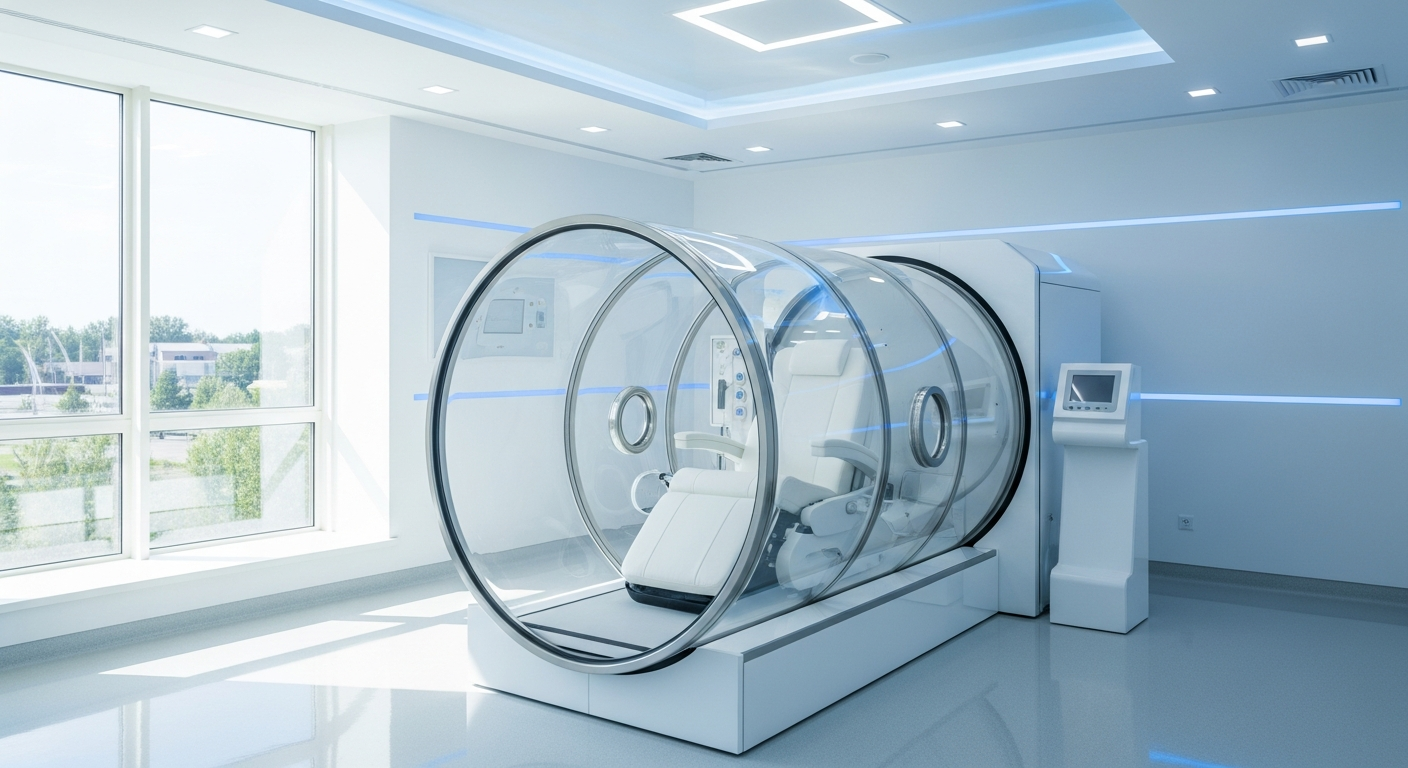
Patients are positioned comfortably inside either a monoplace chamber — designed for a single occupant — or a multiplace chamber that can accommodate several individuals simultaneously. At clinical-grade facilities, the chamber is pressurised gradually, typically to between 1.5 and 3.0 atmospheres absolute (ATA), depending on the condition being addressed. Patients breathe 100% medical-grade oxygen through a fitted mask or hood throughout the session.
During pressurisation, most patients experience a mild sensation of fullness in the ears, similar to descending in an aircraft. Clinical staff guide patients through simple pressure-equalisation techniques beforehand to manage this comfortably. Once target pressure is reached, the therapeutic phase begins. A standard session lasts between 60 and 90 minutes, during which patients can rest, read, or listen to audio.
A Typical Clinical HBOT Schedule
The number of sessions required varies considerably based on the clinical indication. As a general framework, most evidence-based protocols fall within the following ranges:
- Acute wound healing and post-surgical recovery: 20 to 40 sessions, delivered five days per week
- Neurological support and post-concussion protocols: 40 to 60 sessions, with structured clinical reassessment at midpoint
- Athletic performance recovery and anti-ageing optimisation: 10 to 20 sessions, often delivered as an intensive block programme
- Chronic inflammatory conditions: Variable duration, determined by physician evaluation and treatment response
Throughout any HBOT programme, clinical oversight remains continuous. Physicians review your response at defined intervals, adjusting pressure levels, session duration, or frequency based on objective findings and subjective feedback. Potential side effects — including temporary myopia, mild ear discomfort, or oxygen toxicity in rare cases of high-pressure protocols — are monitored closely and managed proactively by the treating clinical team.
At Holina Clinic, every hyperbaric oxygen programme is embedded within a broader integrative health plan, ensuring that each session contributes meaningfully to your overarching wellness and recovery goals under direct medical supervision.
Starting Your HBOT Journey: What to Expect at Holina Clinic
Choosing to explore hyperbaric oxygen therapy is a clinically meaningful decision, and understanding what the process looks like from consultation through to completion helps you arrive prepared, confident, and ready to engage fully with your treatment. At Holina Clinic on Koh Phangan, every HBOT programme begins long before you step inside the chamber.
Your initial consultation involves a comprehensive medical assessment conducted by our supervising physicians. This includes a detailed review of your medical history, current medications, recent imaging or laboratory results where relevant, and a discussion of your primary health goals. This step is not a formality — it is the clinical foundation upon which your personalised treatment protocol is built. Conditions such as untreated pneumothorax, certain ear or sinus pathologies, and specific cardiac presentations require careful evaluation before HBOT is recommended, which is why physician oversight at this stage is non-negotiable.
Once cleared, your care team will outline a tailored session schedule based on your clinical indication. The number of sessions, pressure depth, and session duration are all individualised. A typical course may range from:
- 10 to 20 sessions for recovery-focused protocols, athletic performance support, or post-surgical healing
- 20 to 40 sessions for neurological support, long-term fatigue conditions, or integrative cancer care adjuncts
- Intensive daily formats for guests staying at the retreat who wish to combine HBOT with our broader detoxification, nutrition, and lifestyle medicine programmes
During each session, you will lie comfortably inside our monoplace hyperbaric chamber as pressure gradually increases — a process known as compression. Most patients notice a mild sensation of fullness in the ears during this phase, similar to descending in an aircraft. Our team will guide you through simple equalisation techniques before your first session to ensure this transition is comfortable. Sessions typically last between 60 and 90 minutes, during which many patients read, rest, or simply allow the therapeutic process to unfold.
Following each session, your clinical team monitors your response, adjusting the protocol where necessary based on observed outcomes and your subjective feedback. This ongoing clinical oversight is what separates a medically supervised HBOT programme from unmonitored alternatives, and it is central to how Holina Clinic delivers both safety and results.
For international guests, HBOT integrates seamlessly into our residential wellness programmes, allowing you to combine hyperbaric sessions with IV nutrient therapy, functional medicine consultations, and evidence-based detoxification support — all within one of Southeast Asia’s most respected integrative health environments. We invite you to contact our clinical team to discuss whether hyperbaric oxygen therapy is the right next step for your health.
Hyperbaric oxygen therapy represents one of the most compelling intersections of foundational physiology and modern clinical practice. By delivering pure oxygen at elevated atmospheric pressures, HBOT initiates a cascade of measurable biological responses — accelerating tissue repair, reducing inflammatory markers, supporting neurological function, and enhancing the body’s innate capacity for recovery. The science is not speculative; it is grounded in decades of peer-reviewed research, expanding clinical applications, and the direct experiences of patients who have undergone physician-supervised treatment protocols around the world.
What distinguishes effective hyperbaric oxygen therapy from a passive wellness experience is the clinical rigour behind it. Appropriate candidate selection, accurate pressure and duration protocols, personalised treatment schedules, and ongoing medical oversight are not optional considerations — they are the foundation upon which meaningful outcomes are built. HBOT is a powerful clinical tool, and like all powerful tools, its value depends entirely on how thoughtfully it is applied.
Whether you are navigating post-surgical recovery, managing a chronic inflammatory condition, seeking to optimise cognitive performance, or exploring evidence-based approaches to healthy ageing, HBOT may represent a meaningful addition to your comprehensive health strategy. The conversation begins with an honest clinical assessment of your individual needs, goals, and medical history.
At Holina Clinic in Koh Phangan, Thailand, our experienced medical team offers personalised hyperbaric oxygen therapy programmes within a fully supervised clinical environment. Every protocol is designed around your unique physiology, monitored by qualified practitioners, and integrated within a broader wellness framework tailored to you. We invite you to take the first step toward informed, evidence-based care. Contact Holina Clinic today to schedule your initial consultation and discover whether HBOT is the right clinical choice for your health journey.