“`html
Marcus sat in the consultation room on the thirty-fourth floor, the Bangkok skyline blurred behind rain-streaked glass. He had already undergone stem cell therapy eighteen months ago—cartilage regeneration in both knees, partial success. He had completed forty hyperbaric sessions six months prior, felt oxygen-rich and energised for weeks, then plateaued. Now, at fifty-eight, he was considering peptide therapy, but the question that had brought him here remained unanswered: in what order should these treatments actually work together? His previous clinic had offered them sequentially, almost randomly, as if the body were a waiting list rather than an integrated system. He felt the fatigue of fragmentation, the suspicion that he was paying for therapy without architecture.
Marcus’s dilemma reflects a growing phenomenon among informed patients who have moved beyond single-modality thinking. They recognise that regenerative medicine, hyperbaric oxygen therapy, and peptide signalling each address different biological mechanisms, yet they sense an untapped synergy. What is missing from most clinical conversations is not the therapies themselves, but the orchestration of them—the precise sequencing that allows one intervention to optimise the cellular environment for the next.
This piece is for patients who have already experienced individual advanced therapies and are now seeking to understand combination protocols, as well as those early in their exploration who wish to avoid inefficient sequencing from the outset.
What This Is, Specifically
Therapeutic stacking refers to the sequential and integrated administration of multiple biological and physiological interventions designed to amplify regenerative outcomes through coordinated cellular signalling. Unlike polypharmacy, which often describes the concurrent use of multiple medications (sometimes with iatrogenic risk), therapeutic stacking in regenerative medicine is predicated on temporal and mechanistic complementarity.
The three modalities under discussion operate on distinct but intersecting pathways. Mesenchymal stem cell (MSC) therapy involves the implantation or infusion of undifferentiated cells capable of differentiating into multiple lineages and secreting paracrine factors including anti-inflammatory cytokines and growth factors. Hyperbaric oxygen therapy (HBOT) increases systemic oxygen partial pressure, enhancing mitochondrial function, angiogenesis, and tissue perfusion. Peptide therapeutics, including those targeting growth hormone secretion, collagen synthesis, or specific receptor pathways, act as signalling molecules that can prime or accelerate cellular responses initiated by stem cells and oxygen availability.
Research into MSC therapy has been published extensively in journals including The Lancet and Nature Reviews Molecular Cell Biology, with meta-analyses confirming efficacy in musculoskeletal and inflammatory conditions. HBOT mechanisms have been detailed in Undersea and Hyperbaric Medicine journal, which documents oxygen-dependent cellular repair. Peptide therapy research, particularly regarding growth hormone-releasing peptides and collagen-stimulating compounds, appears in specialised endocrinology and regenerative medicine literature, though large-scale clinical trials remain limited.
The stacking concept itself, however, remains largely unexplored in formal literature. What exists instead is mechanistic plausibility and growing clinical observation among practitioners in regenerative medicine centres.
Why Standard Treatment Often Misses This
Most patients encounter these therapies within a fragmented healthcare ecosystem. Stem cell clinics offer MSC protocols; hyperbaric centres operate independently; peptide practitioners work in isolation. Each modality has developed its own evidence base, clinical guidelines, and patient populations. This structural separation has created an unintended consequence: therapies are administered in isolation or, worse, in arbitrary sequence determined by scheduling or cost rather than biological logic.
The gap widens further because none of these interventions operates in a vacuum. Stem cells require an adequate oxygen environment to express their regenerative potential. HBOT alone, without cellular substrate to regenerate, may enhance perfusion but cannot direct differentiation. Peptides without primed cellular responsiveness may fail to trigger the signalling cascades necessary for tissue remodelling. A patient who receives stem cells without preceding HBOT may be introducing cells into a hypoxic microenvironment that suppresses their efficacy. A patient who undergoes HBOT before stem cell therapy may achieve elevated oxygen levels that dissipate before the stem cells have established themselves.
Additionally, conventional medicine often views these interventions with epistemological scepticism. They fall outside standard pharmaceutical regulation in many jurisdictions, and this regulatory ambiguity has created a secondary problem: clinical guidance on sequencing does not exist in mainstream medical literature. Patients and practitioners alike lack the legitimising framework that would come from prospective, randomised studies examining combination protocols. The absence of evidence is being mistaken for evidence of absence, and the result is conservative, disconnected care.
The Mechanistic Logic of Sequencing
Understanding why sequence matters requires examining what happens at the cellular level. When stem cells are introduced into tissue, they begin secreting bioactive factors, but their effectiveness depends on local microenvironmental conditions. Hypoxia suppresses MSC proliferation and can skew differentiation toward fibrotic rather than regenerative pathways. Conversely, hyperoxic conditions created by preceding HBOT sessions prime mitochondrial function and enhance the energy-dependent processes by which stem cells engage in tissue remodelling.
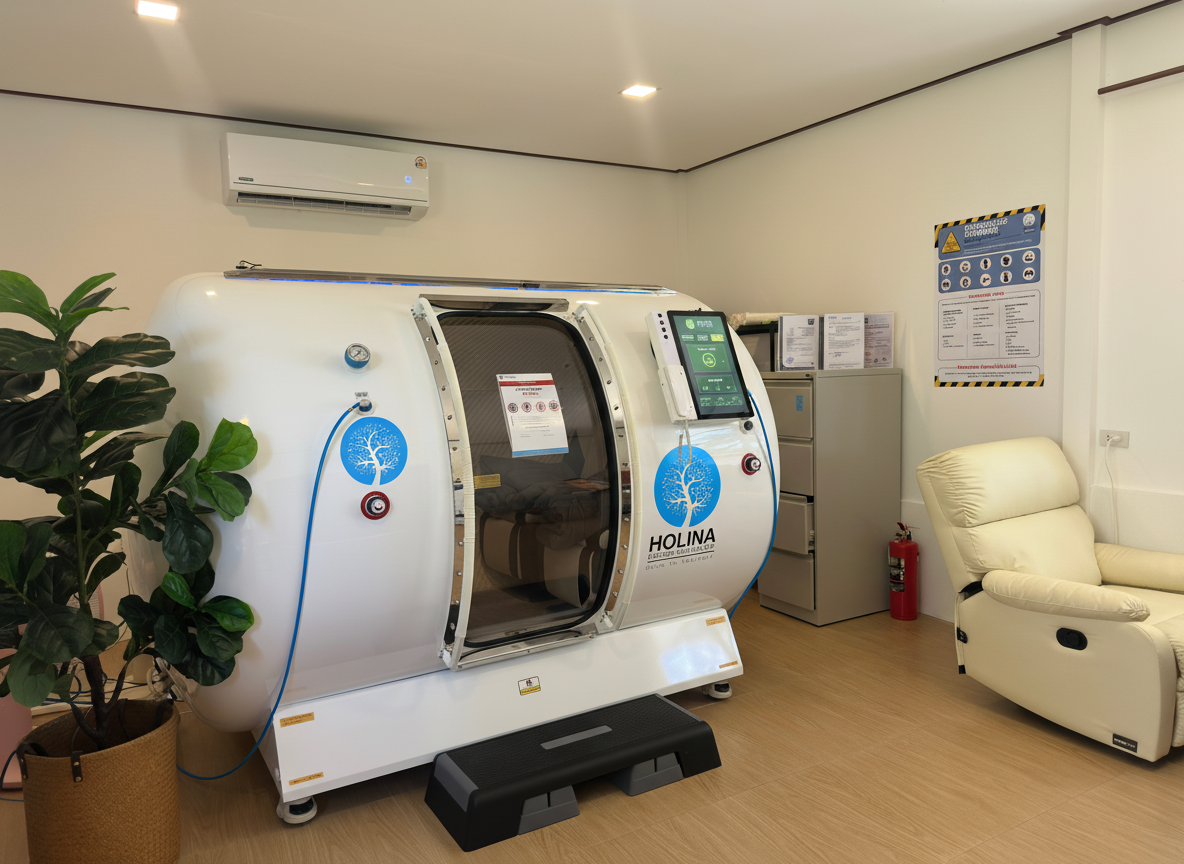
The optimal sequence, therefore, often begins with HBOT. A course of hyperbaric oxygen therapy preceding stem cell administration establishes a tissue environment rich in oxygen and primed with upregulated angiogenic signalling. This creates a more receptive milieu for MSC engraftment and paracrine factor expression. Following stem cell implantation, peptide therapy can then be introduced to further amplify growth factor signalling and collagen synthesis, extending the regenerative window that would otherwise naturally narrow after 3-4 weeks.
This sequence respects biological timing. Peptides administered too early, before stem cells have established paracrine signalling, may create signal noise. Administered after stem cell efficacy has peaked, they can reignite dormant regenerative pathways. HBOT at the end of the protocol, conversely, may be less efficient; it is better deployed as preparation or as maintenance between active regenerative interventions.
Clinical centres in regenerative medicine capitals, particularly those with integrated multidisciplinary teams, have begun observing improved outcomes with this logic-driven approach, though the evidence remains observational rather than randomised.
What a Residential Programme Provides
A comprehensive residential programme addressing combination therapy requires what fragmented outpatient care cannot deliver: synchronised timing, integrated assessment, and real-time clinical adjustment. At Holina Clinic, this means a structured protocol spanning 3-4 weeks, beginning with baseline immunological and mitochondrial assessment, followed by an initial phase of HBOT at Holina Clinic to establish optimal tissue oxygenation. Stem cell administration follows, with cells cultured and prepared to the patient’s specific regenerative need, whether musculoskeletal, neurological, or systemic. Throughout the process, peptide therapy is timed to reinforce the signalling cascade initiated by stem cell engraftment.
The residential model also permits something crucial: continuous monitoring and individualisation. Blood markers, functional assessment, and imaging can guide real-time adjustments to peptide dosing or HBOT frequency. Patients benefit from the expertise of regenerative physicians, hyperbaric specialists, and endocrinologists working within a unified clinical framework rather than in silos.
This approach represents not simply the addition of more treatments, but the application of mechanistic understanding to create protocols where each intervention enhances the conditions for the next. Those seeking to move beyond conventional care toward optimised, sequenced regenerative protocols may find value in understanding how these therapies function together.
“`