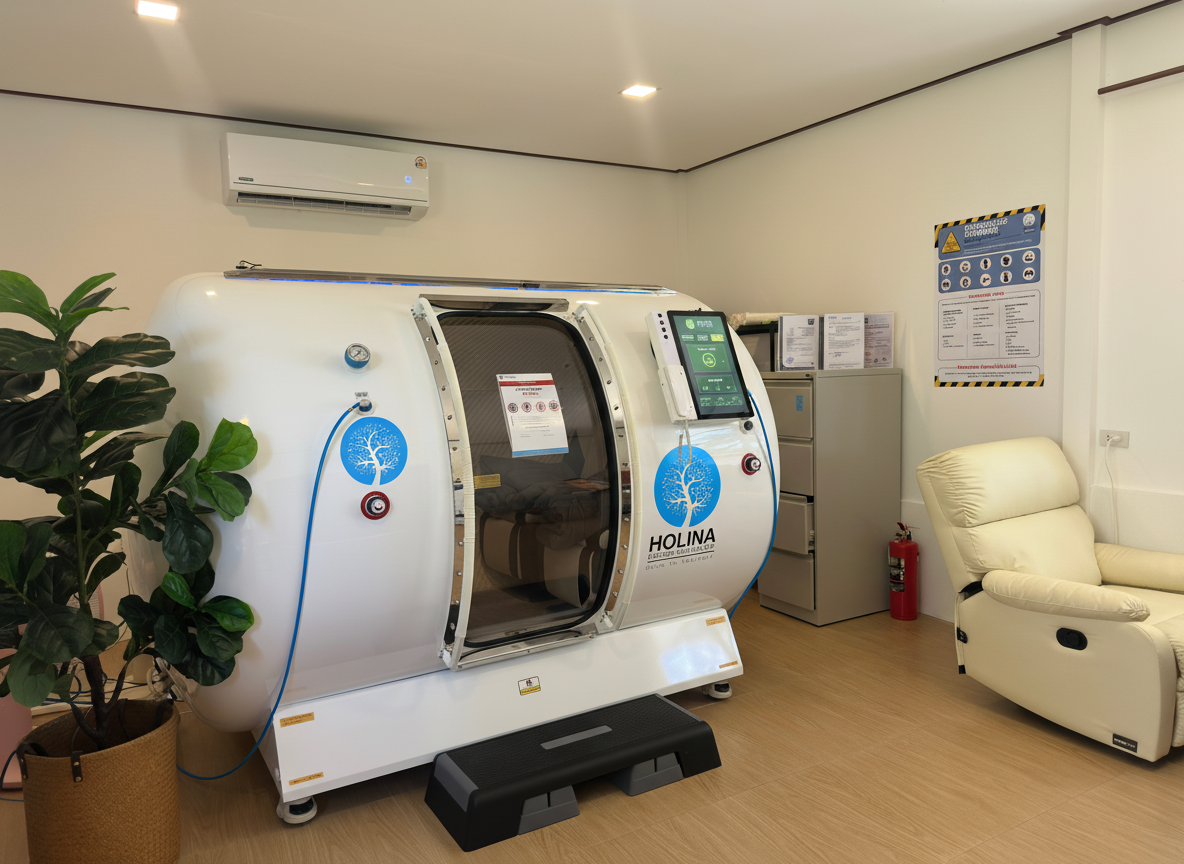
Margaret sits in the anteroom of the hyperbaric chamber, her hands resting on her lap. She is fifty-four. For three years, her body has felt like a landscape she no longer recognises. The hot flushes arrive without warning, leaving her damp and exhausted. Her sleep fractured, her mood unpredictable. Six months ago, a DEXA scan revealed what her rheumatologist had warned her about: her bone density has declined by fourteen per cent since her last measurement. The radiologist used the word osteopenia. Her GP offered hormone replacement therapy. She considered it, hesitated, and found herself researching alternatives. Now, breathing pure oxygen at two point four atmospheres of pressure, she wonders whether her cells are already adapting, whether this pressure and this gas might restore something she thought was simply lost to time.
Menopause is not a disease, yet it produces clinical consequences that demand recognition and intervention. The withdrawal of oestrogen across the perimenopausal and postmenopausal years precipitates changes in bone metabolism, vascular function, neurological signalling, and tissue repair mechanisms that extend far beyond the transient symptoms of hot flushes and night sweats. For many women, conventional management focuses narrowly on symptom suppression rather than on the underlying physiology of cellular ageing and regeneration. Hyperbaric oxygen therapy, or HBOT, represents an emerging approach to address these deeper mechanisms. It works at the level of tissue oxygenation, mitochondrial function, and angiogenesis, processes that decline significantly during and after menopause.
This piece is for women navigating menopause who experience bone density loss, recurrent symptoms despite standard treatment, or who seek physiologically grounded alternatives to conventional hormone replacement therapy.
What This Is, Specifically
Hyperbaric oxygen therapy involves breathing pure oxygen whilst seated in a pressurised chamber, typically at pressures between 2.0 and 3.0 atmospheres absolute. At these pressures, the amount of oxygen dissolved in plasma increases dramatically, independent of haemoglobin saturation. This process, documented extensively in The Lancet and the British Journal of Dermatology, creates a temporary hyperoxic state that stimulates several physiological cascades relevant to postmenopausal bone loss and systemic ageing.
Menopause involves the precipitous decline of oestrogen, particularly 17-beta-oestradiol. This hormone regulates osteoclast activity, suppresses pro-inflammatory cytokines, and maintains endothelial function. Its withdrawal accelerates bone resorption and suppresses new bone formation, a transition documented in detail by the National Institute for Health and Care Excellence. In the first five to ten years after the final menstrual period, women lose bone density at rates of one to three per cent annually in the lumbar spine and femoral neck.
HBOT addresses this through multiple mechanisms. Hyperoxia stimulates angiogenesis, the formation of new blood vessels, which improves nutrient and oxygen delivery to bone-forming cells. It upregulates hypoxia-inducible factor-1-alpha, or HIF-1α, a transcription factor that regulates both osteoblast differentiation and mitochondrial function. Additionally, the increased partial pressure of oxygen reduces the systemic inflammatory burden often elevated during menopause, a state sometimes termed “inflammageing.”
The evidence base, whilst still developing, includes studies from PubMed Central examining HBOT’s effects on bone healing, wound repair, and osteoporotic fracture recovery. Direct randomised trials specific to menopause-related osteopenia remain limited, making this an area of genuine clinical innovation rather than established consensus.
Why Standard Treatment Often Misses This
Hormone replacement therapy, or HRT, remains the first-line pharmacological intervention for moderate to severe menopausal symptoms and osteoporosis prevention. It is effective for many women. However, not all women are candidates. Contraindications include personal history of oestrogen-sensitive breast cancer, active thromboembolism, uncontrolled hypertension, and certain liver conditions. Even among eligible candidates, some women decline HRT due to residual concerns about breast cancer risk, or because they experience side-effects such as mood lability, weight gain, or persistent migraines.
Furthermore, HRT addresses hormone deficiency through replacement alone. It does not directly enhance tissue repair mechanisms, mitochondrial efficiency, or angiogenic capacity, the cellular processes that deteriorate alongside hormonal change. A woman may receive HRT and still experience fatigue, slow wound healing, persistent joint pain, or cognitive fog, symptoms that reflect broader age-related decline rather than oestrogen deficiency alone.
Non-pharmacological approaches, such as weight-bearing exercise and calcium supplementation, offer modest benefit to bone density, typically slowing rather than reversing loss. They also require sustained compliance and may be contraindicated in women with concurrent joint dysfunction or severe osteoporosis, where fracture risk limits what load-bearing activity is safe.
HBOT occupies a different space: it is a cellular intervention that does not replace hormones but rather optimises the biological substrate upon which hormones and other therapeutic agents work. It may enhance the efficacy of HRT when used concurrently, or it may provide meaningful benefit as a standalone intervention for women for whom HRT is contraindicated.
Mitochondrial Function and Oxygenation in the Menopausal Cell
Oestrogen is a mitochondrial hormone. It regulates electron transport chain efficiency, oxidative phosphorylation, and the production of adenosine triphosphate, or ATP, the cell’s primary energy currency. Postmenopausal women show measurable reductions in mitochondrial ATP production, contributing to fatigue, reduced exercise tolerance, and slower cellular repair. This is not merely a symptom: it is a fundamental shift in cellular energetics.
The bone-forming cell, the osteoblast, is metabolically expensive. It produces collagen, mineralises matrix, and maintains the microarchitecture that determines bone strength. All of these processes are ATP-intensive. In the postmenopausal state, osteoblasts experience both oestrogen withdrawal and, often, relative hypoxia due to reduced vascular density. HBOT addresses the latter directly.
By increasing dissolved oxygen in plasma, HBOT reaches tissues that have inadequate capillary perfusion, supporting osteoblast function even when systemic oestrogen levels are low. Studies examining HBOT in the context of irradiated bone and diabetic wound healing have demonstrated improved osteoblast recruitment and differentiation, outcomes mediated by HIF-1α stabilisation. Whilst these studies are not specific to menopause, the mechanism is relevant. A menopausal woman with declining bone density faces, in effect, a tissue engineering challenge: her bones require renewed angiogenesis and metabolic support.
Additionally, hyperoxic exposure suppresses the RANK-RANKL-OPG signalling pathway, the molecular axis that governs osteoclast activation and bone resorption. This has been documented in cellular models and animal studies, suggesting that HBOT may exert a dual effect: supporting bone formation whilst restraining bone loss.
What a Residential Period Provides
HBOT at Holina Clinic is delivered within a structured residential programme that extends beyond the chamber itself. Women arrive after often years of managing menopause with either pharmaceutical interventions, lifestyle strategies, or both. A residential stay allows for comprehensive assessment of bone density, metabolic markers, inflammatory status, and symptom burden before treatment begins.
The programme integrates HBOT with nutritional optimisation, focusing on bioavailable calcium, magnesium, vitamin K2, and protein intake, all critical for osteoblast function. It includes gentle resistance and balance training, calibrated to the individual’s fracture risk and current capacity, which amplifies HBOT’s effects on bone remodelling. Sleep, thermal regulation, and emotional processing receive equal clinical attention, as menopausal symptom severity is substantially modulated by circadian rhythm stability and stress response integrity.
Over two to four weeks, women undergo repeated HBOT sessions in a supportive clinical environment. Follow-up assessment measures changes in bone turnover markers and, where appropriate, repeat imaging at three months. The residential model allows for rapid iteration and adjustment, and for observation of emerging benefits such as improved sleep quality, reduced hot flushes, and enhanced exercise tolerance, all of which amplify the long-term benefits of the protocol.
If you are exploring options for menopause management or bone health that prioritise cellular regeneration and physiological mechanism rather than symptom suppression alone, explore Holina Clinic’s comprehensive programmes.