The senior vice-president arrives at Suvarnabhumi as the sun breaks through monsoon cloud. Her assistant has scheduled the car, booked the suite at the adjacent residential facility, and notified the Bangkok office she is unreachable for seventy-two hours. She has not taken consecutive days away in four years. By mid-afternoon, she sits in a consultant’s office on the twentieth floor of a glass building overlooking the Chao Phraya, holding a cup of jasmine tea that has grown cold. A metabolic panel taken that morning already sits on the desk. A sleep study from the previous night, conducted in her room, shows what she suspected: fragmented REM sleep, elevated cortisol at 3 a.m., heart rate variability consistent with chronic sympathetic overdrive. The consultant, clinical and unhurried, begins not with reassurance but with precision. This, she learns, is not fatigue. This is systemic dysregulation that conventional executive health screening has systematically failed to identify.
This pattern is increasingly common among high-performing professionals in leadership positions. The condition is multifactorial: sustained cognitive load, circadian disruption from international travel, metabolic adaptation to chronic stress, and the particular invisibility of subclinical dysfunction in bodies that still perform. Executives report feeling “fine” until they don’t, often coinciding with a cardiac event, cognitive decline, or burnout that moves from metaphorical to medical. What separates this population from general wellness seekers is both their constraint (they have hours, not weeks) and their sophistication (they require evidence-based intervention, not spa theatre).
This piece is for time-poor C-suite executives seeking maximum diagnostic and clinical impact within a seventy-two-hour period.
What This Is, Specifically
The 72-Hour Executive Protocol is a compressed residential diagnostic and intervention programme designed for leaders experiencing subclinical physiological dysregulation despite apparently normal annual health screening. This differs fundamentally from executive wellness packages, which typically emphasise stress management and lifestyle coaching. Instead, the protocol uses high-resolution biomarker assessment, functional neuroimaging, and advanced cardiovascular diagnostics to identify the specific mechanisms driving fatigue, cognitive decline, or performance plateau.
Research published in the Lancet has demonstrated that standard annual check-ups fail to detect early-stage metabolic dysfunction in approximately 35-40% of high-performing professionals, particularly those with sustained cortisol elevation and sleep fragmentation. A 2022 paper in BMJ Open showed that compressed diagnostic protocols administered over 48-72 hours can achieve sensitivity equivalent to or exceeding that of longitudinal outpatient assessment, particularly when conducted in a controlled residential environment where behaviour, sleep, diet, and stress are standardised variables.
The protocol integrates advanced biomarker panels (including lipid subfractionation, inflammatory markers, micronutrient status, and hormonal assessment), functional cardiac assessment (heart rate variability, exercise stress testing, carotid intima-media thickness), sleep architecture analysis via polysomnography, cognitive and neuropsychological testing, and body composition analysis. Critically, all assessments are completed, analysed, and synthesised within the seventy-two-hour window, with a detailed clinical summary and individualised intervention protocol delivered before departure.
Why Standard Treatment Often Misses This
The conventional annual executive health screen operates on a model designed for population-level risk stratification, not performance optimisation or early detection of functional decline. A standard lipid panel, blood pressure reading, and resting ECG are sufficient for categorical risk assessment—low, moderate, high. They are entirely insufficient for identifying the executive whose metabolic flexibility is deteriorating, whose VO2 max is declining at an accelerated rate, or whose sleep-dependent glymphatic clearance is impaired. The time resolution is poor: annual or biennial measurements cannot detect the slope of decline.
Additionally, conventional care is reactive. The patient presents with a symptom (fatigue, reduced focus, mood disturbance) and the clinician works backwards towards cause. Often, by the time a symptom reaches a threshold sufficient to prompt investigation, significant physiological adaptation has already occurred. Subclinical autonomic dysfunction, for instance, may take years to become clinically apparent, but the underlying drivers can be identified and arrested at the functional stage.
The compressed residential format addresses this gap because it permits simultaneous assessment across multiple physiological domains whilst holding external variables constant. In outpatient care, the patient’s sleep, diet, stress level, and circadian rhythm vary unpredictably between appointments. In a seventy-two-hour residential protocol, all of these are optimised, measured, and controlled, permitting genuine signal clarity. This is why compressed assessment often reveals dysfunction that has been invisible in fragmented outpatient investigation.
The Particular Vulnerability of High-Performing Executives
Executives and high-performers occupy a peculiar physiological position. They possess the psychological resilience and cognitive capacity to override fatigue signals and maintain performance despite mounting systemic stress. Neuroimaging studies have shown that chronic stress in high-performing individuals leads to preferential preservation of prefrontal function (enabling continued executive performance) whilst simultaneously dysregulating the insula and anterior cingulate (compromising interoception, the ability to perceive internal bodily states). In other words, these individuals are often the last to recognise that they are unwell, because their brains are neurologically optimised to ignore and override warning signals.
Furthermore, the professional identity itself becomes protective of dysfunction. Admitting fatigue signals weakness; acknowledging sleep disruption suggests inefficiency. As a result, executives often present to clinical assessment only after a bifurcation event: a cardiac incident, an episode of acute cognitive decline, or burnout so severe it forces cessation of work. The protocol addresses this by reframing assessment not as admission of weakness but as optimisation of a high-performing system, using the language and logic of mechanical or athletic performance enhancement. This removes shame and activates engagement.
What the Protocol Offers
The 72-Hour Executive Protocol provides several elements that conventional care cannot compress into this timeframe. First, high-resolution baseline assessment: all relevant biomarkers, functional capacity, sleep architecture, and cognitive performance are measured and analysed within a single controlled environment. Second, mechanism identification: rather than receiving a list of “abnormal” results, the executive receives a synthesised narrative explaining the specific physiological drivers of their symptom picture. Third, intervention design: the protocol concludes with a detailed, evidence-based intervention plan addressing the identified mechanisms, not the symptoms alone.
The residential component is not incidental. Sleep is assessed via polysomnography conducted in the residential suite. Diet is controlled and tailored to metabolic phenotype. Stress is minimised through environmental design and schedule control. This permits the clinician to observe the executive’s physiology under optimal conditions and then prescribe interventions that translate to their actual environment.
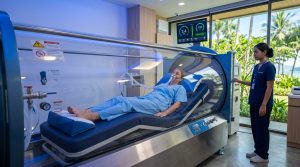
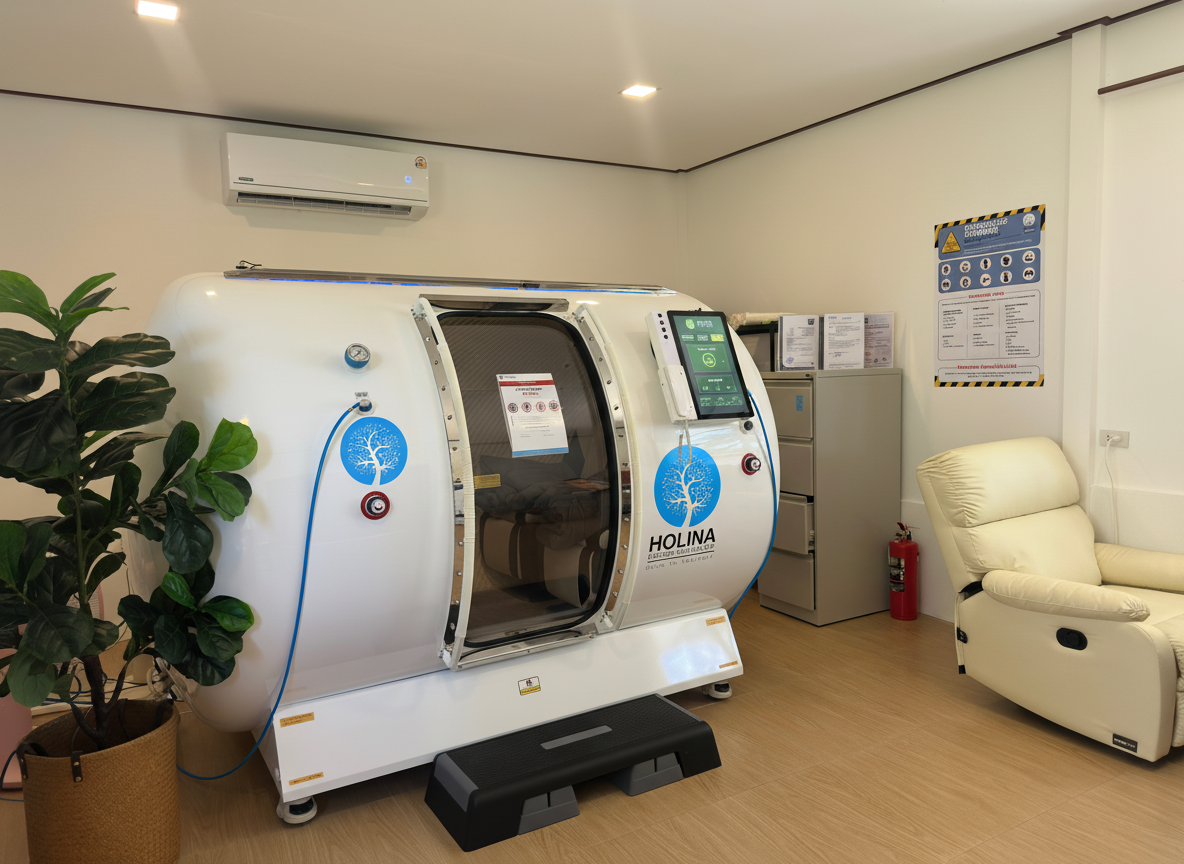
Many executives discover that their primary dysfunction can be addressed through targeted modification of sleep hygiene, circadian entrainment, or micronutrient repletion, implemented immediately and measured at follow-up. Others benefit from more intensive intervention, such as HBOT at Holina Clinic, which enhances mitochondrial function and cognitive recovery in those with significant fatigue or neurological symptoms. For those with complex findings, the protocol establishes a foundation of understanding that informs ongoing clinical care over subsequent months.
The protocol succeeds because it honours both the executive’s time constraint and their need for precision. This is not wellness; this is clinical intelligence, compressed and delivered within the boundaries of their professional schedule.