Marcus sits in the waiting room of a private clinic in central Bangkok, the air conditioning hissing softly against the afternoon heat outside. For three years, he has felt something shifting in his body—fatigue that no amount of sleep resolves, cognitive fog that settles over his afternoons like humidity, a subtle inflammation that shows in his skin and joints. His last comprehensive blood panel, conducted six months ago at his home clinic in London, returned results marked “within normal range.” The numbers looked clean. Yet he does not feel clean. He does not feel well. He has travelled to Thailand specifically because standard reassurance has become a form of dismissal, and he suspects that the absence of disease in a blood report is not the same as the presence of health.
What Marcus is experiencing is increasingly common among high-functioning professionals and health-conscious individuals: the gap between conventional laboratory interpretation and genuine biological optimisation. The markers that trigger clinical concern—the thresholds at which pathology is formally named—are often set to identify disease, not to detect the early, subclinical shifts that precede it. This distinction matters profoundly. Advanced diagnostics represent a different philosophy of medicine altogether, one that recognises mitochondrial function, micronutrient bioavailability, inflammatory markers at sensitive levels, and metabolic stress responses long before conventional ranges sound an alarm.
This piece is for accomplished individuals whose standard health investigations have returned reassuring results, yet whose lived experience contradicts those findings—and for those seeking to optimise health before disease emerges.
What This Is, Specifically
Advanced diagnostics, sometimes termed “functional medicine testing” or “optimised health assessment,” represent a recalibration of laboratory medicine toward subclinical and functional parameters rather than pathological thresholds. Where conventional medicine asks “Is this disease present?”, advanced diagnostics ask “Is this system functioning optimally?” The distinction is not semantic.
A standard lipid panel, for instance, measures total cholesterol, HDL, LDL, and triglycerides against population-based reference ranges. The Lancet and cardiovascular epidemiology consistently show that individuals within “normal” LDL ranges still experience atherosclerotic events. Advanced lipid profiling instead measures particle size, oxidised LDL, Lipoprotein(a), and apolipoprotein ratios—factors that predict cardiovascular risk more accurately than conventional measures. Similarly, standard glucose testing captures fasting glucose or HbA1c; advanced assessment includes fasting insulin, glucose tolerance curves, and continuous glucose monitoring, which reveal insulin resistance years before type 2 diabetes emerges.
The World Health Organisation acknowledges that 50% of non-communicable disease burden is attributable to modifiable metabolic risk factors detected early. Yet standard primary care rarely screens for these factors until they cross diagnostic thresholds. Advanced micronutrient analysis examines bioavailable forms of B vitamins, vitamin D receptor sensitivity, iron metabolism including ferritin and hepcidin, magnesium speciation, and selenium status—each critical to mitochondrial function and immune regulation, each frequently suboptimal in individuals whose conventional panels appear normal. Inflammatory markers such as high-sensitivity C-reactive protein, homocysteine, and omega-3 to omega-6 ratios provide cellular-level insight into chronic inflammation that precedes all degenerative disease. BMJ research demonstrates that subclinical inflammation predicts functional decline, cognitive ageing, and cardiovascular events independent of traditional risk factors.
Why Standard Treatment Often Misses This
Conventional laboratory medicine operates within a disease-detection paradigm. Reference ranges are established through population studies, typically derived from “healthy” individuals with no diagnosed pathology. These ranges are then set at 95% confidence intervals, meaning they capture the middle bulk of what is statistically “normal”—not what is optimal. An individual’s marker can drift substantially from youthful baseline yet remain within “normal range,” and this drift goes unremarked and unaddressed.
Furthermore, standard primary care operates under significant time and resource constraints. A typical consultation allows ten to fifteen minutes. Blood tests ordered in this context focus on ruling out acute or established disease, not on the granular assessment of metabolic function. Insurance and public health systems rarely reimburse advanced testing, which creates both a financial and cultural bias toward minimal screening. The result is a two-tier system: those who can afford advanced diagnostics detect subtle dysfunction early, whilst those relying on conventional care receive reassurance until they cross into clinical pathology.
There is also the matter of training. Most medical schools dedicate limited curriculum to nutritional biochemistry, micronutrient metabolism, or subclinical metabolic assessment. Clinicians trained in this traditional framework do not recognise fatigue and brain fog in the presence of “normal” blood work as signals requiring investigation; instead, these symptoms are often attributed to stress, mood, or functional disorders. The language of optimisation—of supporting cellular function before it fails—remains peripheral to medical practice organised around diagnosis and treatment.
Cellular Metabolism and the Limits of Population Ranges
At the cellular level, function depends on cofactors: minerals, vitamins, antioxidants, and amino acids that facilitate enzymatic reactions. A standard blood panel measures perhaps 20 of these. Advanced assessment measures 200 or more parameters, including intracellular micronutrient concentrations, amino acid profiles, and functional metabolic markers that reflect how efficiently cells are actually working.
The concept of “reference range” itself becomes problematic at this level. Population ranges are horizontal comparisons—where does your marker sit relative to others? Optimisation requires vertical comparison—where does your current marker sit relative to your own physiology and your own baseline? Advanced diagnostics employ individualised interpretation frameworks, recognising that an individual with a family history of early cognitive decline might warrant different micronutrient targets than the population average.
Mitochondrial function, increasingly recognised in NICE guidance and academic medicine as foundational to health and longevity, cannot be assessed through standard bloodwork. Advanced diagnostics employ functional measures: CoQ10 status, carnitine metabolism, organic acid profiles that reveal energy production efficiency, and oxidative stress markers. These reveal whether fatigue and brain fog originate in genuine cellular exhaustion or elsewhere entirely.
What a Residential Period Provides
Advanced diagnostics become most powerful within a residential programme where assessment and intervention occur together. Initial testing provides a complete molecular portrait: not merely “you are healthy” but rather “your mitochondrial function is suboptimal, your zinc bioavailability is low, your inflammatory load is elevated despite normal acute phase reactants, and your insulin sensitivity is declining.” This specificity transforms treatment from guesswork into precision.
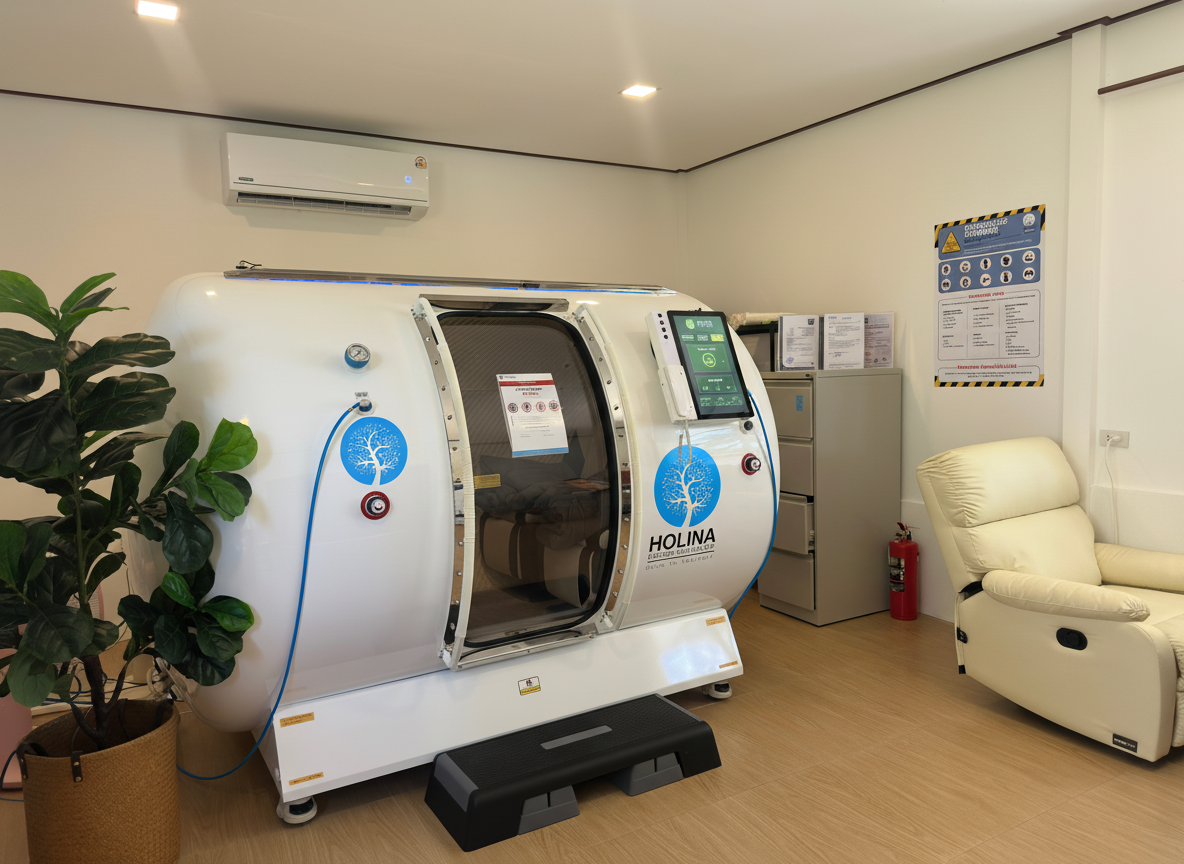
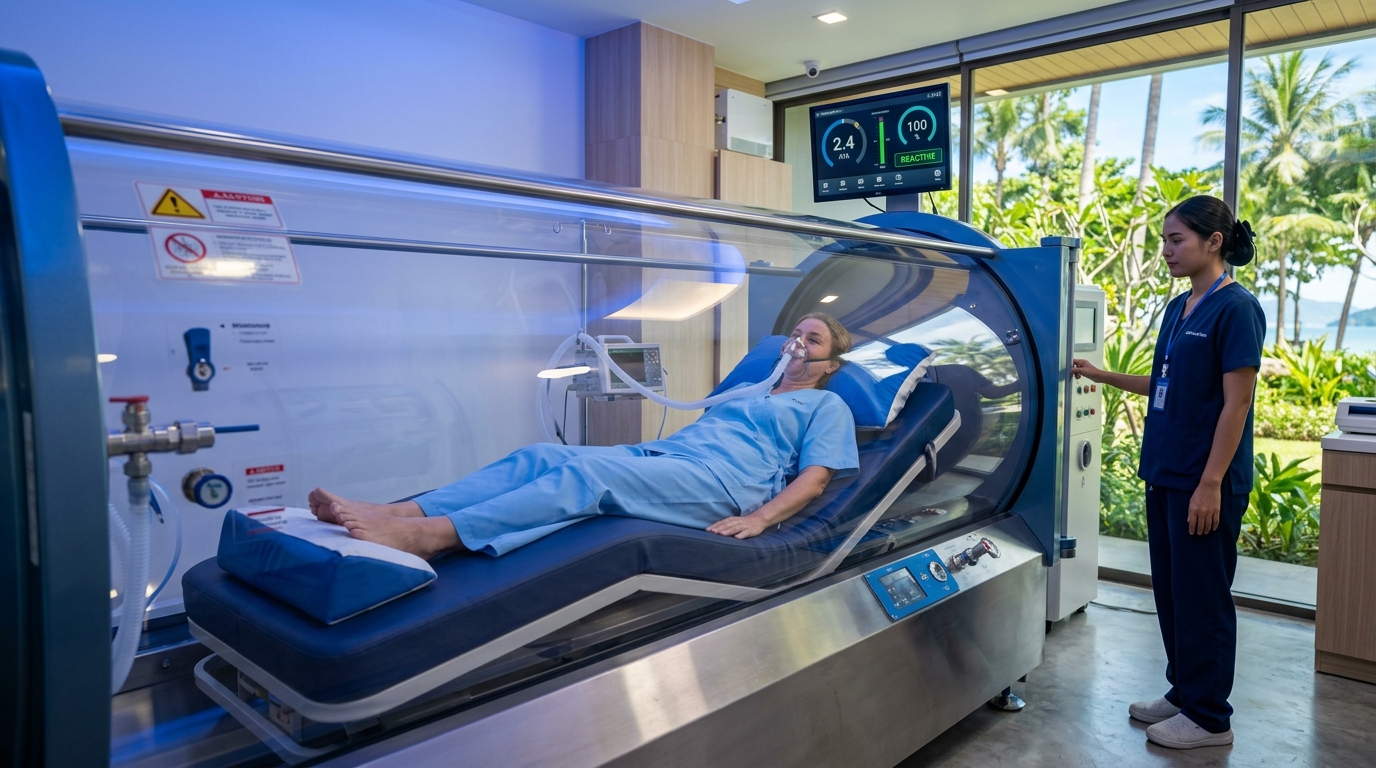
A residential period allows real-time optimisation based on these findings. Nutritional protocols are calibrated to individual biochemistry rather than applied broadly. Cellular stress responses are assessed through sleep architecture, heart rate variability, and cortisol patterns, then addressed through targeted environmental design and therapeutic timing. Interventions such as HBOT at Holina Clinic are integrated when markers suggest oxygen utilisation dysfunction. Cognitive function, metabolic markers, and inflammatory parameters are reassessed during the stay, allowing clinicians to refine protocols in real time and teaching residents to recognise their own restoration.
The programme prioritises detection of what is malfunctioning beneath the surface of “normal” results, then restores function before it deteriorates into named disease.