Modern medicine excels at identifying what has already gone wrong — but many patients arrive at a clinic with symptoms that defy easy categorisation on standard panels. Bio resonance testing represents a different approach: examining the body’s electromagnetic landscape for patterns that may indicate functional imbalances before they manifest as clearly measurable disease. It is a tool of assessment, not diagnosis — and at Holina Clinic, it forms one part of a much broader picture.
What Is Bio Resonance?
Bio resonance is a form of assessment based on the principle that every cell, tissue, and organ in the body emits electromagnetic frequencies, and that deviations from healthy frequency patterns may correspond to functional disturbances. Bio resonance technology uses specialised equipment to detect and analyse these electromagnetic signals, comparing them against established reference ranges.
The field draws from decades of research in biophysics and the study of endogenous electromagnetic fields — an area that has attracted growing scientific interest as technologies for measuring subtle biological signals have improved. While bio resonance is not a replacement for conventional diagnostic methods, it offers a complementary layer of information that can be particularly valuable in complex, multi-system presentations.
How Do Bio Resonance Machines Work?
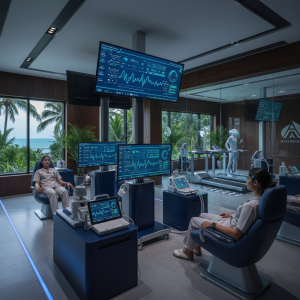
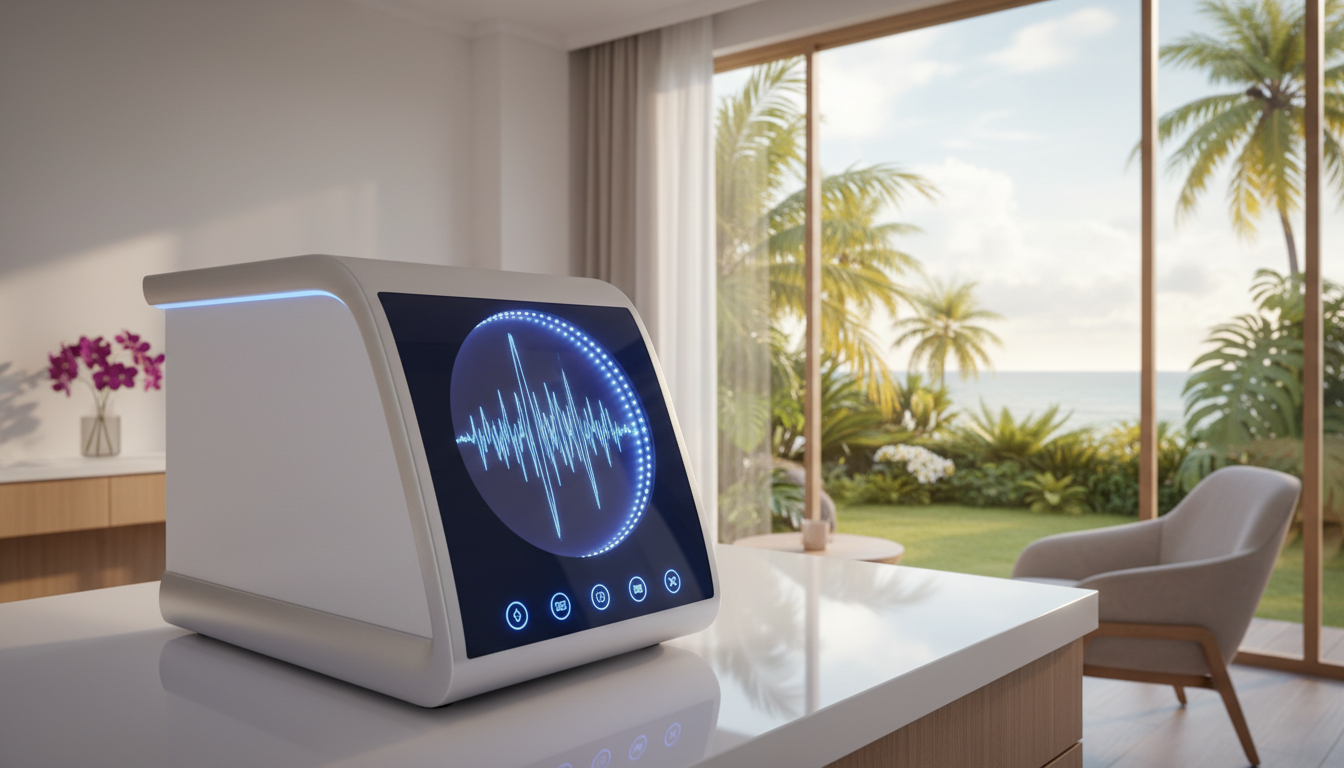
Bio resonance devices typically work by placing electrodes or hand-held sensors in contact with the body, through which small, controlled electrical signals are introduced and the body’s response — its electromagnetic “reply” — is measured. The device analyses the frequency spectrum of this response, identifying patterns that may suggest stress, imbalance, or altered function in specific organ systems, tissues, or physiological pathways.
Some systems also incorporate an inverse-wave feedback function, in which the device generates signals intended to counteract or harmonise disruptive frequency patterns — though the therapeutic applications of this function are still the subject of ongoing research and clinical exploration.
What Can Bio Resonance Assessments Reveal?
Bio resonance assessments are typically used to screen for functional patterns across a broad range of body systems simultaneously. Depending on the specific system used, assessments may provide information relevant to:
- Digestive function and potential food sensitivities
- Immune system stress patterns
- Environmental and chemical load indicators
- Hormonal and endocrine balance signals
- Energetic markers associated with specific organ systems (liver, kidneys, lungs, etc.)
- Potential pathogen or microbial stress indicators
It is important to understand that bio resonance testing provides indicators and patterns — not clinical diagnoses. Results should always be interpreted by a trained practitioner in the context of a full clinical history, and any findings of potential significance should be followed up with appropriate conventional investigations.
How Does Bio Resonance Fit Into a Diagnostic Workup?
Bio resonance testing is most valuable not as a standalone tool but as part of a broader diagnostic conversation. In an integrative medicine context, it can serve as an initial screening layer — helping to identify areas of concern that may warrant further investigation — or as a means of monitoring functional change over the course of a treatment programme.
At Holina Clinic, bio resonance assessment is used alongside conventional blood markers, advanced functional tests, and clinical history-taking to build the most complete possible picture of each patient’s health landscape. This integrative approach allows practitioners to identify patterns that no single test alone might reveal.
Who Might Benefit From Bio Resonance Testing?
Bio resonance testing may be of particular interest to individuals who have experienced persistent or unexplained symptoms — fatigue, digestive disturbance, immune dysregulation, hormonal imbalance — without a clear diagnosis on conventional testing. It is also used by individuals pursuing proactive health optimisation who wish to understand their functional status beyond standard blood panels.
As with all assessment modalities, suitability varies by individual. A clinical consultation will determine whether bio resonance testing is appropriate and what additional assessments should be combined for the most informative picture.
At Holina Clinic
Holina Clinic incorporates bio resonance testing as part of its comprehensive diagnostic offering on Koh Phangan, Thailand. Our physician-supervised diagnostic process is designed to integrate multiple assessment modalities — functional, biophysical, and conventional — to provide a genuinely holistic view of health that supports precise, personalised treatment planning.
Learn more about Advanced Diagnostics at Holina Clinic →
Always consult with a qualified physician before beginning any new treatment programme.
nn
For a broader overview of how this treatment fits within Holina’s integrated approach, read Advanced Diagnostics at Holina Clinic: Bio-Resonance, Biofeedback & Wegamed.