Marcus sits in the air-conditioned clinic room in Bangkok, his shoulders curved inward, fingers pressed against his temples. Six months ago, he returned to his office after a mild COVID-19 infection. His colleagues noticed nothing amiss. But Marcus knows something fundamental has shifted. By mid-afternoon, his cognition becomes fog; his legs feel weighted as though he is walking through water. A flight of stairs exhausts him for two days. He has seen three doctors who offered different diagnoses, different treatments, different prognoses. One suggested it was deconditioning. Another implied it was psychological. Marcus brings a leather notebook filled with symptom logs, blood test results, activity records. He is searching not for reassurance, but for clarity: what is actually happening in his body, and why do the standard interventions seem to make him worse?
The distinction between post-COVID fatigue and chronic fatigue syndrome (CFS) represents one of the most clinically significant yet frequently conflated diagnostic challenges in modern medicine. Both present as profound exhaustion, both resist conventional treatment protocols, yet they demand fundamentally different approaches to assessment and recovery. The confusion is understandable: overlap in symptom presentation is substantial, and diagnostic criteria remain contested across international medical bodies. Yet the underlying mechanisms, progression patterns, and evidence-based interventions diverge in crucial ways.
This piece is for individuals experiencing persistent fatigue after COVID-19 infection, their families, and clinicians seeking to differentiate between these conditions with diagnostic precision.
What This Is, Specifically
Post-COVID fatigue is characterised by disproportionate exhaustion emerging during or after SARS-CoV-2 infection, typically accompanied by cognitive, respiratory, or autonomic symptoms. The Lancet’s comprehensive review of long COVID defines the condition as symptoms or dysfunction continuing for more than four weeks after acute infection onset. The prevalence remains contested, but studies suggest 10-30% of those infected experience persistent symptoms beyond the acute phase.
Chronic fatigue syndrome (also termed myalgic encephalomyelitis, or ME/CFS) is a distinct neurological condition predating the pandemic. NICE clinical guideline NG206 specifies it as persistent, unexplained fatigue lasting at least four weeks (often considerably longer), accompanied by post-exertional malaise, unrefreshing sleep, and cognitive dysfunction. Historically, ME/CFS emerges following viral or bacterial infection, though causation remains incompletely understood.
The critical distinction: post-COVID fatigue may resolve spontaneously within months to two years; ME/CFS is typically chronic, lasting years or indefinitely. Post-COVID patients often have documented viral persistence or organ involvement on imaging; ME/CFS diagnosis currently relies on clinical criteria rather than biomarkers. Many post-COVID patients recover fully with time and conservative management. Most ME/CFS patients require specialist intervention and do not recover without treatment.
Why Standard Treatment Often Misses This
The conventional medical approach to fatigue centres on exclusion: ruling out anaemia, thyroid dysfunction, infection, depression. This framework fails both post-COVID fatigue and ME/CFS because neither is a diagnosis of exclusion. Standard blood work often returns normal. Conventional cardiopulmonary rehabilitation, appropriate for deconditioning, can provoke deterioration in patients with post-exertional malaise.
A fundamental error lies in assumption of recovery trajectory. A general practitioner may reassure a post-COVID patient that “most people improve within three months.” While true for acute symptoms, this oversimplifies the subset whose fatigue persists and deepens. Simultaneously, newly recognised post-COVID cohorts receive rehabilitative protocols designed for acute critical illness, not for months-long constellation of neurological symptoms.
ME/CFS encounters even greater diagnostic delay. BMJ analysis has documented that patients average 2-3 years before correct diagnosis. Patients are frequently told their symptoms are deconditioning, nocebo effects, or psychiatric, leading to inappropriate graded exercise therapy or cognitive behavioural therapy as primary interventions. When these worsen symptoms, clinicians often attribute deterioration to “lack of adherence” rather than questioning the underlying mechanism.
Both conditions require recognition that abnormal fatigue represents genuine pathophysiology, not motivation failure, and that rehabilitation intensity must be carefully calibrated to individual tolerance thresholds.
Post-Exertional Malaise: The Diagnostic Linchpin
Post-exertional malaise (PEM) is the cardinal feature distinguishing ME/CFS from simple fatigue or deconditioning. PEM manifests as disproportionate worsening of symptoms following physical or cognitive exertion, typically delayed by hours to days, and extending beyond the exertion duration itself. A patient might walk for twenty minutes and experience two days of immobility. The response is non-linear and highly individualised.
Post-COVID fatigue may include exercise intolerance, but true PEM patterns are less consistent. Many post-COVID patients can gradually increase activity tolerance over weeks; ME/CFS patients often cannot, regardless of motivation or graduated progression. This distinction is not semantic. Recent Lancet work on ME/CFS mechanisms has highlighted dysregulation of immune activation and autonomic response following exertion as potentially distinct pathophysiological processes compared to simple post-viral fatigue.
Clinical assessment of PEM requires detailed temporal mapping: not merely “are you tired after activity?” but “describe the sequence, timing, and character of symptoms following a standard exertion.” Patients often report cognitive as well as physical crashes. Some describe a “ceiling” of sustainable activity, below which symptoms remain stable. Recognition of PEM patterns informs entirely different rehabilitation philosophy: managing within exertional boundaries rather than progressively expanding them.
What a Residential Period Provides
Proper differentiation and individualised treatment of post-COVID fatigue or suspected ME/CFS requires extended clinical observation, comprehensive investigation beyond routine blood work, and iterative adjustment of therapeutic approach. A residential programme allows this precision.
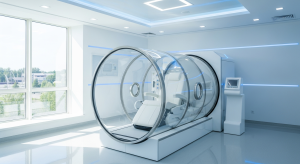
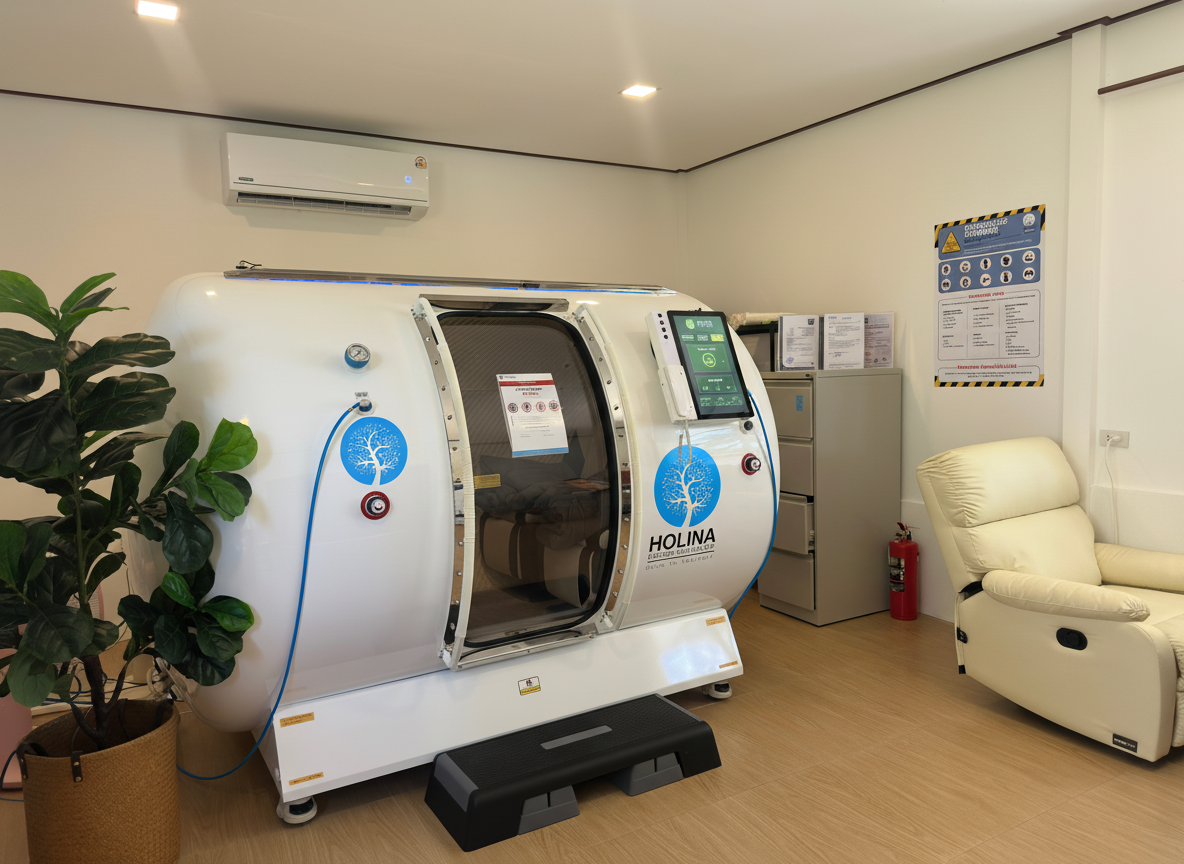
At Holina Clinic, a residential assessment period begins with detailed history mapping symptom timeline, exertional patterns, autonomic features, and cognitive changes. Functional capacity is observed during daily activity, not merely self-reported. Investigations may include autonomic function testing, cardiac imaging, immunological markers, and detailed sleep architecture assessment. Interventions are titrated carefully: some patients benefit from HBOT at Holina Clinic, whilst others require primarily pacing guidance and autonomic stabilisation. Nutritional status, sleep quality, and psychological resilience are all assessed and optimised.
Importantly, a clinical team can observe what occurs during progressive exertion and symptom response in real time, recognising whether recovery patterns suggest post-COVID fatigue (typically improving with conservative management) or indicators requiring ME/CFS-specific protocols.
The programme is designed not as forced rehabilitation, but as diagnostic clarification and precision treatment planning. Patients leave with sophisticated understanding of their condition and individualised, evidence-based approach to recovery.
Explore Holina Clinic’s comprehensive residential programmes.