“`html
The morning light catches the edge of the metabolic analyser as Marcus sits perfectly still, watching his real-time VO2 readings climb across the screen. Fifty-three years old, former venture capitalist, currently suspended in that particular anxiety of high-net-worth individuals who have optimised everything except the one thing that matters: whether their body is actually ageing at the rate their calendar suggests. His last executive panel blood work showed textbook normal ranges. His trainer said he was in the best shape of his adult life. Yet he wakes at four in the morning with a sense of metabolic unease he cannot quite name. The cardiologist offered reassurance. The functional medicine consultant offered supplements. Neither had ordered the deeper analysis that now reveals what his generic markers had masked: chronically elevated fasting insulin, subclinical inflammation visible only in high-sensitivity CRP, and a lipid particle distribution that standard cholesterol ratios had rendered invisible. For Marcus, personalisation does not mean a bespoke suit or a curated wine list. It means the difference between ageing at sixty and ageing at seventy, measured at the cellular level.
The language of personalised medicine has become widespread in wellness circles, yet most programmes remain fundamentally generic. They sort clients into broad categories, assign standard protocols, and adjust only when something fails conspicuously. This creates a profound clinical gap: the absence of true individual interpretation. Biohackers and business leaders who understand the value of data often find themselves caught between conventional medicine, which ignores nuance, and commercial wellness, which inflates minor variations into expensive interventions. What emerges from this space is not insight but confusion. The condition in question is not a disease but rather the misalignment between biomarker reality and applied protocol. It affects executives and health-conscious professionals who have moved beyond seeking reassurance and now demand precise, evidence-based intervention tailored to their measurable physiology.
This piece is for individuals who understand their biomarkers intimately and want clinical interpretation that honours that understanding without resorting to speculation.
What Personalised Biomarker Interpretation Actually Is, Clinically
Personalised medicine, as defined by the Lancet Commission on the future of precision medicine, moves beyond diagnosis to individual risk stratification and optimisation based on measurable biological variation. This goes considerably deeper than generic reference ranges. Where conventional laboratories report single values against population means, precision analysis examines patterns: the relationship between fasting insulin and HOMA-IR, the distribution of apolipoprotein particle size, the ratio of oxidative stress markers to antioxidant capacity, and inflammatory mediators that exist in clinically silent ranges but drive accelerated ageing.
The theoretical foundation rests on the recognition that identical blood values can represent vastly different physiological states depending on individual metabolic phenotype. A fasting glucose of 95 mg/dL may represent perfect stability in one person and early insulin dysregulation in another. This principle, explored extensively in European Heart Journal research on cardiovascular risk stratification, reveals why population-based medicine often fails high-performing individuals. The protocol must therefore derive from individual data architecture: what markers are present, what relationships they hold, what ranges represent risk given this specific person’s genetics, occupational stress, sleep architecture, and metabolic history.
At this level, personalisation ceases to be marketing language and becomes clinical methodology. It requires the integration of multiple datasets over time, the identification of individual baseline rather than population mean, and the construction of interventions designed not for a category of person but for the measurable biology in front of you.
Why Standard Wellness Protocols Miss the Actual Problem
The critical failure of generic wellness programmes lies in their assumption of uniform response. A programme designed around “optimising metabolic health” offers the same macronutrient ratios, the same exercise prescription, and the same supplement stack to a woman with insulin resistance as to a man with excellent glucose control but subclinical inflammation. The logic is economically efficient. It is clinically indefensible.
For health-conscious professionals specifically, the gap widens further. These individuals often enter programmes already optimised in the conventional sense: normal weight, regular exercise, no diagnosed conditions. Standard medicine therefore pronounces them well and offers no further insight. Commercial wellness then offers expensive interventions based on population trends rather than individual biology. A biohacker with perfect fasting glucose but impaired glucose tolerance in the two-hour post-load state will receive identical carbohydrate restriction guidance as someone with opposite pathology. Neither optimises; both waste cognitive and metabolic capital on misaligned behaviour.
The deeper issue is that conventional biomarkers were designed for disease detection, not optimisation. They are robust for identifying type 2 diabetes but insensitive to the metabolic trajectory that precedes it. They cannot distinguish between two people with identical standard lipid panels but opposite directions of particle progression. They cannot reveal whether someone’s inflammation is driven by chronic infection, autoimmune activation, or maladaptive response to their current training load. Without this specificity, intervention remains probabilistic rather than targeted. The person remains uncertain whether their protocol is actually addressing their specific physiology or simply matching a plausible-sounding story to their test results.
The Architecture of Biomarker-Driven Protocol Design
A genuinely personalised protocol begins not with a predetermined framework but with layered data interpretation. This requires several components working in sequence. First, comprehensive baseline assessment that extends beyond conventional panels to include markers of oxidative stress, immune activation, metabolic flexibility, and mitochondrial function. Second, longitudinal measurement at intervals calibrated to the individual question: someone tracking insulin sensitivity requires different testing frequency than someone optimising for longevity markers. Third, multivariate analysis that identifies which markers in this person’s profile are drivers of risk and which are passengers.
The science supporting this approach emerges from research in Nature Medicine on precision oncology and metabolic heterogeneity, where identical diagnoses reveal completely different molecular drivers requiring completely different treatment approaches. The principle translates directly to wellness and longevity: the person with elevated inflammatory markers but suppressed antioxidant response requires anti-inflammatory intervention plus antioxidant restoration. The person with elevated oxidative stress but intact antioxidant capacity simply needs oxidative stress reduction. These are not subtle distinctions. They determine whether an intervention works, fails neutrally, or actively worsens the underlying biology.
Once this architecture is established, intervention becomes specific. Dietary changes target the particular dysregulation present rather than a generic “optimisation.” Supplement protocols address measured deficiency rather than assumed risk. Physical training is modulated around the specific metabolic phenotype and capacity for recovery. The person receives a protocol written for them, not for a category they happen to fit.
What Biomarker-Guided Residential Programming Offers
A residential assessment period designed around true personalisation provides several things that outpatient care cannot. First, the controlled environment necessary for accurate baseline measurement. Nutrition, sleep, stress, and training variables are isolated, allowing biomarkers to reflect physiology rather than lifestyle noise. Second, the time required for proper interpretation. Detailed conversation about medical history, genetic predisposition, occupational stress, sleep architecture, and previous response to interventions cannot be rushed in a clinical appointment. Third, real-time protocol adjustment as you train, respond, and provide feedback on how interventions feel in your body.
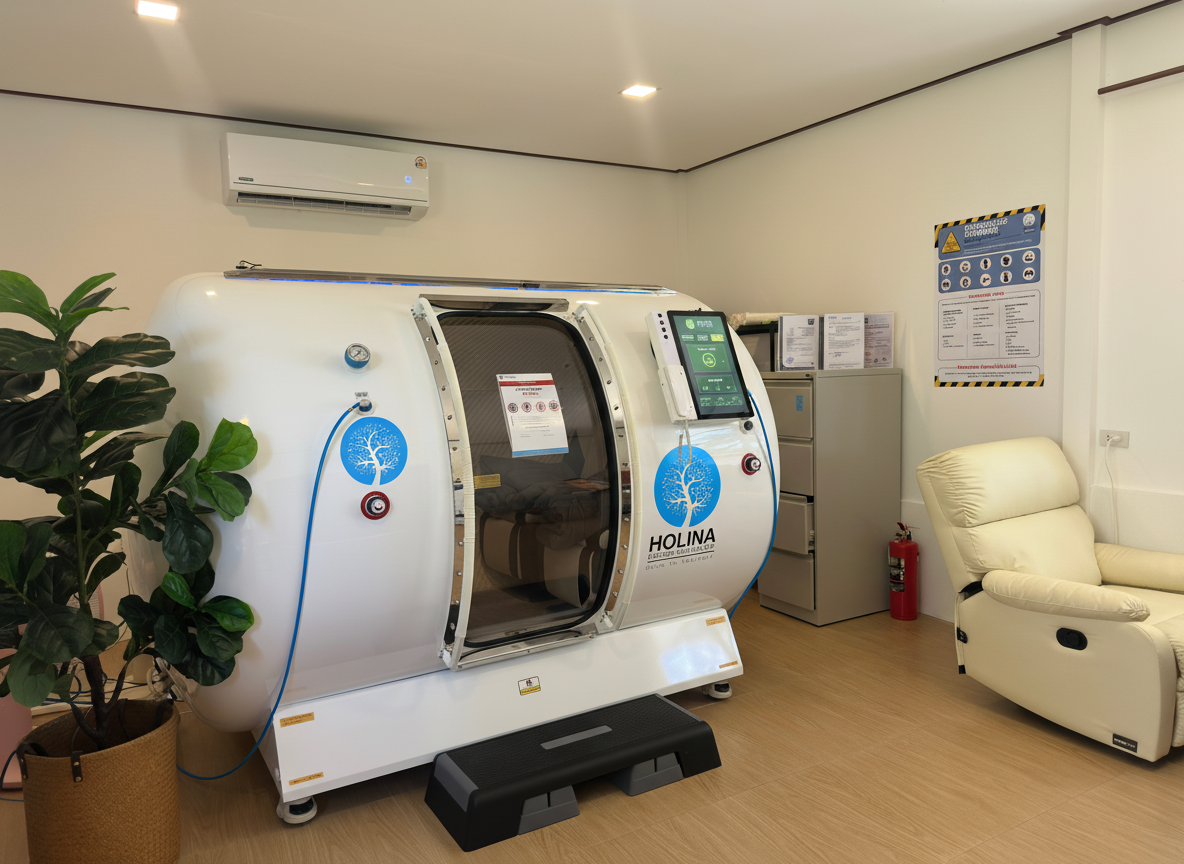
At Holina Clinic, this process begins with expanded biomarker assessment, including markers standard providers never measure. The clinical team then constructs your specific protocol, informed by your measurable biology rather than by what works for most people. This might include targeted nutritional interventions, specific training modalities such as HBOT at Holina Clinic for those whose oxidative stress and recovery capacity warrant it, stress resilience coaching, sleep architecture optimisation, or supplement support calibrated to your measured deficiencies. The residential programme then becomes your opportunity to embed these measures and experience their effect before returning to your normal environment. The protocol you leave with is not a guess. It is a reflection of who you actually are, biologically, and what your body specifically requires to move towards genuine longevity rather than simply avoiding disease.
“`